The mysterious C-40 19-2404 / N235JF and its role
The U.S. Air Force is operating two highly unusual Boeing 737-700 aircraft—military C-40 variants—that fly without visible registration markings and are effectively untraceable via public flight-tracking platforms. Their missions, ownership structures, and modifications suggest roles in covert transport and airborne intelligence operations. This website earlier wrote this article about these two mysterious aircraft.
The first aircraft, tail number 21-0024, also known as N972BJ, has previously been linked to discreet movements of U.S. special operations forces into conflict zones. Its lack of identifiable markings reduces attention from observers and complicates open-source tracking.
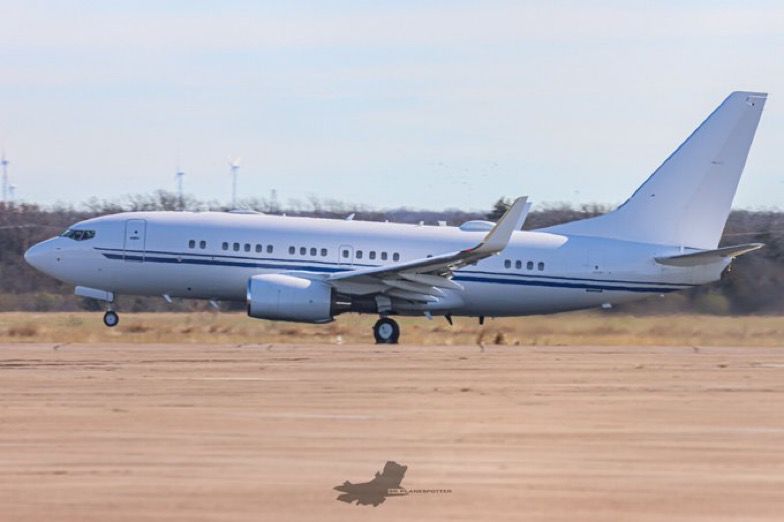
The second aircraft is even more opaque. Known in civilian records as N235JF and known by the military serial 19-2404, which is not shown anywhere on the fuselage, it entered service after 21-0024 and has since remained largely invisible to flight-tracking networks.
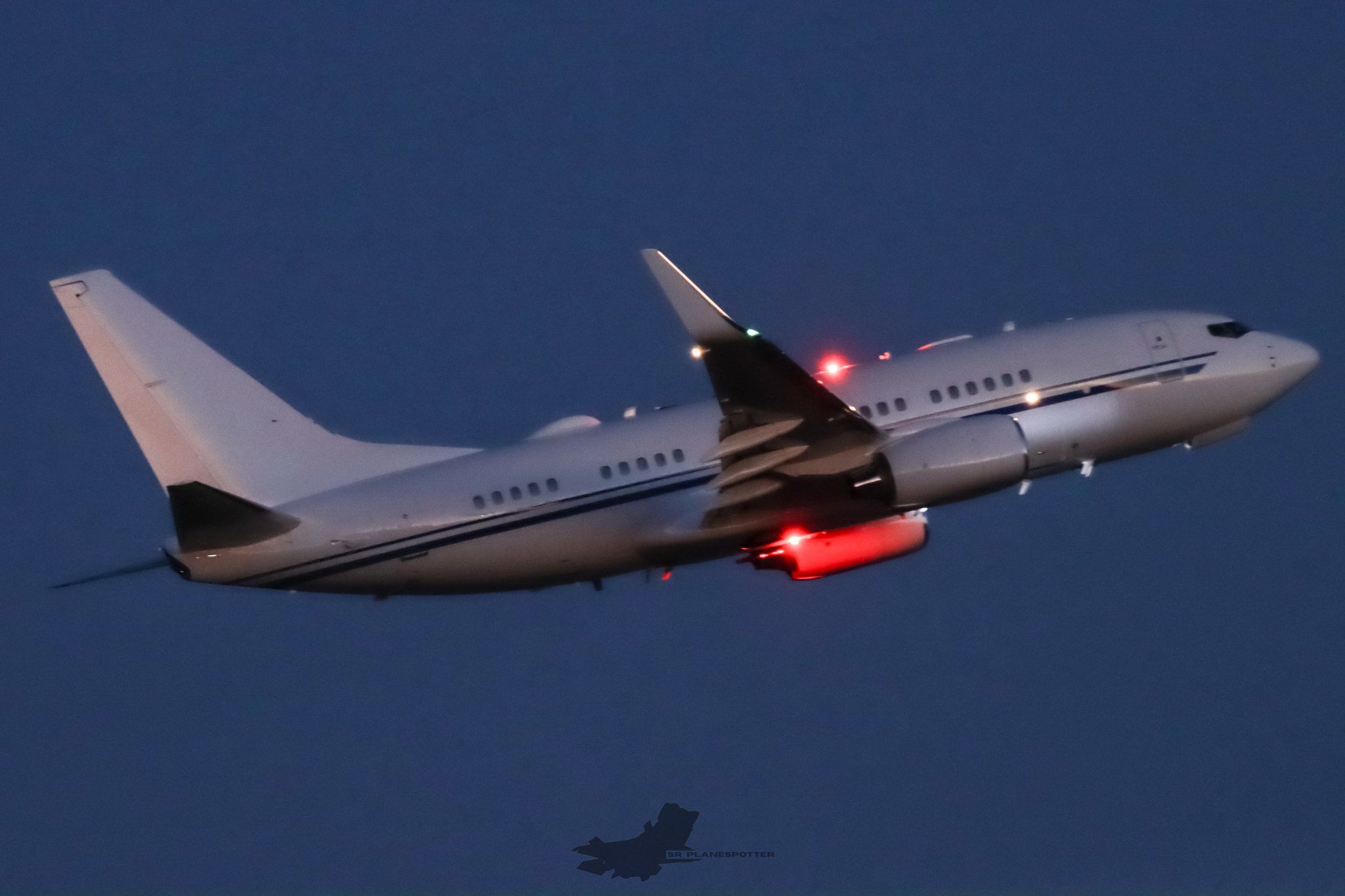
Photo by SR_planespotter
The aircraft is a Boeing Business Jet (BBJ) that previously flew for, among others, the government of Kazakhstan (P4-KAZ) before it was purchased by the United States government. The likely reason for choosing a BBJ is the additional fuel tanks, which allow the aircraft to remain airborne for longer and perform long non-stop flights. This makes it ideal for crisis situations where the aircraft needs to be deployed urgently.
Its transponder hex code is AE108D, and the last publicly visible tracking data points to a test flight on March 14, 2025. The aircraft is believed to be operated out of Pope Army Airfield in North Carolina. Both C-40s can be seen in the background of this photo made at Pope Army Airfield.
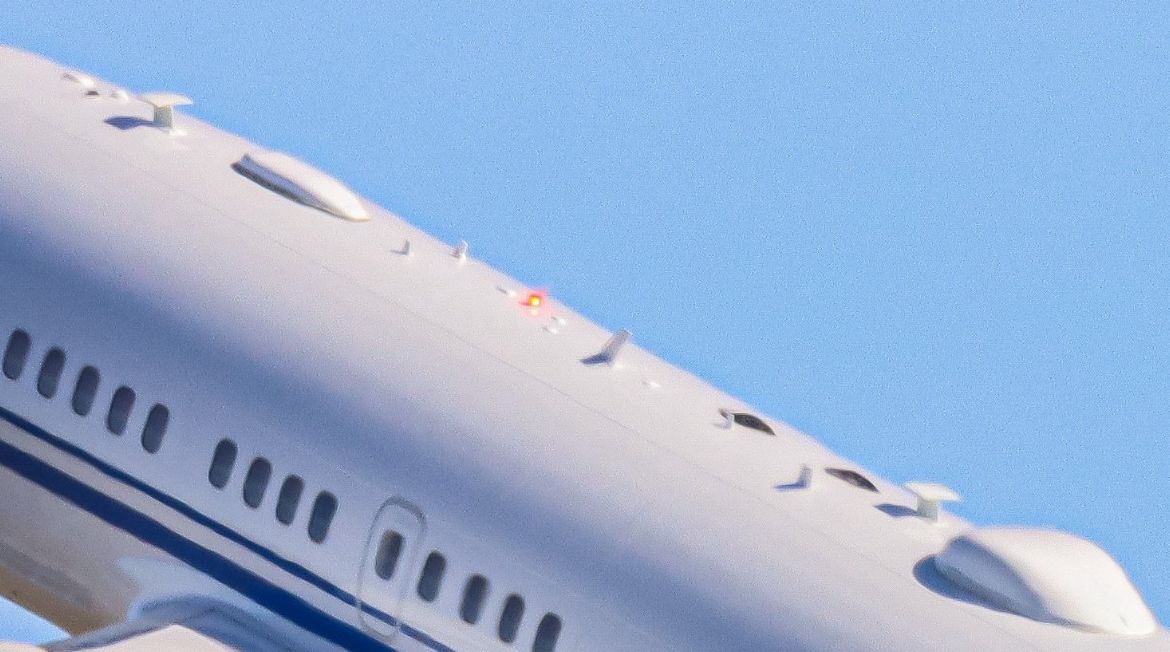
Although officially registered to GWP LLC—a shell company with no public activity—the aircraft underwent extensive modification by L3Harris, a major defense contractor. Photographs show a cluster of antennas and equipment mounted on the upper fuselage, indicating a sophisticated communications or signals intelligence capability.
Greenville is home to L3Harris (formerly L3 Integrated Systems), a major U.S. contractor that converts standard aircraft—such as C-40s, P-3s, C-130s, Gulfstreams, 737s, and special mission business jets—into:
- ISR platforms
- Electronic warfare aircraft
- Command-and-Control relay platforms
The aircraft did 6 to 8 hours of testing over the Multi-Sensor Test Facility (MSTF) near Greensville. This is a specialized testing range and operations center used to evaluate and tune airborne radar, intelligence, surveillance, and electronic warfare systems—commonly for L3Harris-modified aircraft.
The MSTF is effectively the proving ground for these aircraft before delivery to the U.S. military or foreign customers.
It is possible that this N235JF is equipped with very special equipment enabling direct communication via encrypted radio with the President of the United States.
Aircraft that are National Command Authority (NCA)-capable — i.e., that can communicate directly with the President, the Secretary of Defense, STRATCOM and the nuclear command chains — are those fitted with EHF/AEHF SATCOM, hardened UHF, HNW, Global Broadcast Service, and NSA-approved Type-1 cryptographic equipment.
We know that, before a drug boat is destroyed (an action that very likely will kill occupants), permission is first requested from the President.
N235JF might be able to forward imagery or footage taken by the P-8A (see below the role of the special VPU-2 P-8) to the President.
The photo below was made by SR_planespotter. This gives the impression this C-40 is used for intelligence and communication purposes.
Operations Near Norway
In June 2025, N235JF was observed operating just south of Rygge, Norway, while a U.S. Navy P-8 Poseidon aircraft flew in the same area. The C-40 used the callsign AMPEX84 and orbited for an extended period. The parallel presence of the P-8—a platform associated with maritime patrol, anti-submarine warfare, and undersea infrastructure monitoring—suggests both aircraft may have been involved in surveillance related to suspected sabotage of pipelines or seabed cables. The audio recording of pilots talking to ATC be be listened to here.
St. CROIX
The C-40 N235JF was photographed in September 2025 at the St. Croix airport at the Virgin Islands. At the same time, a VPU-2 P-8A was stationed at an airport in Puerto Rico. The distance between the two islands is just 100 km.
Deployment to El Salvador
After June, there were no public sightings of N235JF until November 2025, when it was photographed at Comalapa Air Base at El Salvador International Airport (San Óscar Arnulfo Romero y Galdámez). At the same time, two other U.S. military aircraft were present:
- AC-130J Ghostrider (15-5825)
- P-8A Poseidon (airframe 168999, operating under the misleading Bureau Number 169012)
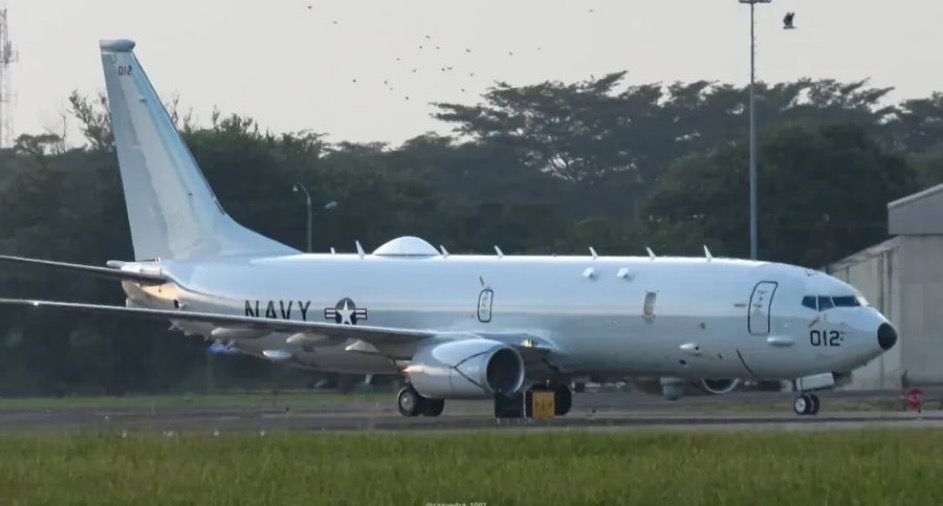
A bit more on the P-8A Poseidon . This is not a regular submarine hunter like other P-8s are. The aircraft is operated by Special Projects Unit (VPU) 2 Wizards. This unit is known for conducting signals intelligence (SIGINT), electronic intelligence with a fleet of 5 modified P-8A’s. In contrast to most other US Navy P-8As, this aircraft has a large hump on the upper side of the fuselage. This houses an antenna that enables UHF-band satellite radio communication. The system is known as Mobile User Objective System (MUOS). On the underside, several small antennas are also visible. These are absent on most other P-8As. The Aviationist did an article on the special P-8A’s. In 2021 Forbes published a story about the VPU-2 P-8 aircraft. The secret P-8 version has COMINT Communications Intelligence equipment. It is used to intercept, identify, and analyze radio and data communications from ships, aircraft, and ground transmitters. COMINT equipment turns the P-8 into a maritime electronic surveillance platform, not just an anti-submarine aircraft. This 2016 article also confirms the role of VPU-2.
This photo taken at Comalapa Air Base by Fernando Saavedra (via avionicos503 at Instagram) confirms the P-8A is indeed 169012.
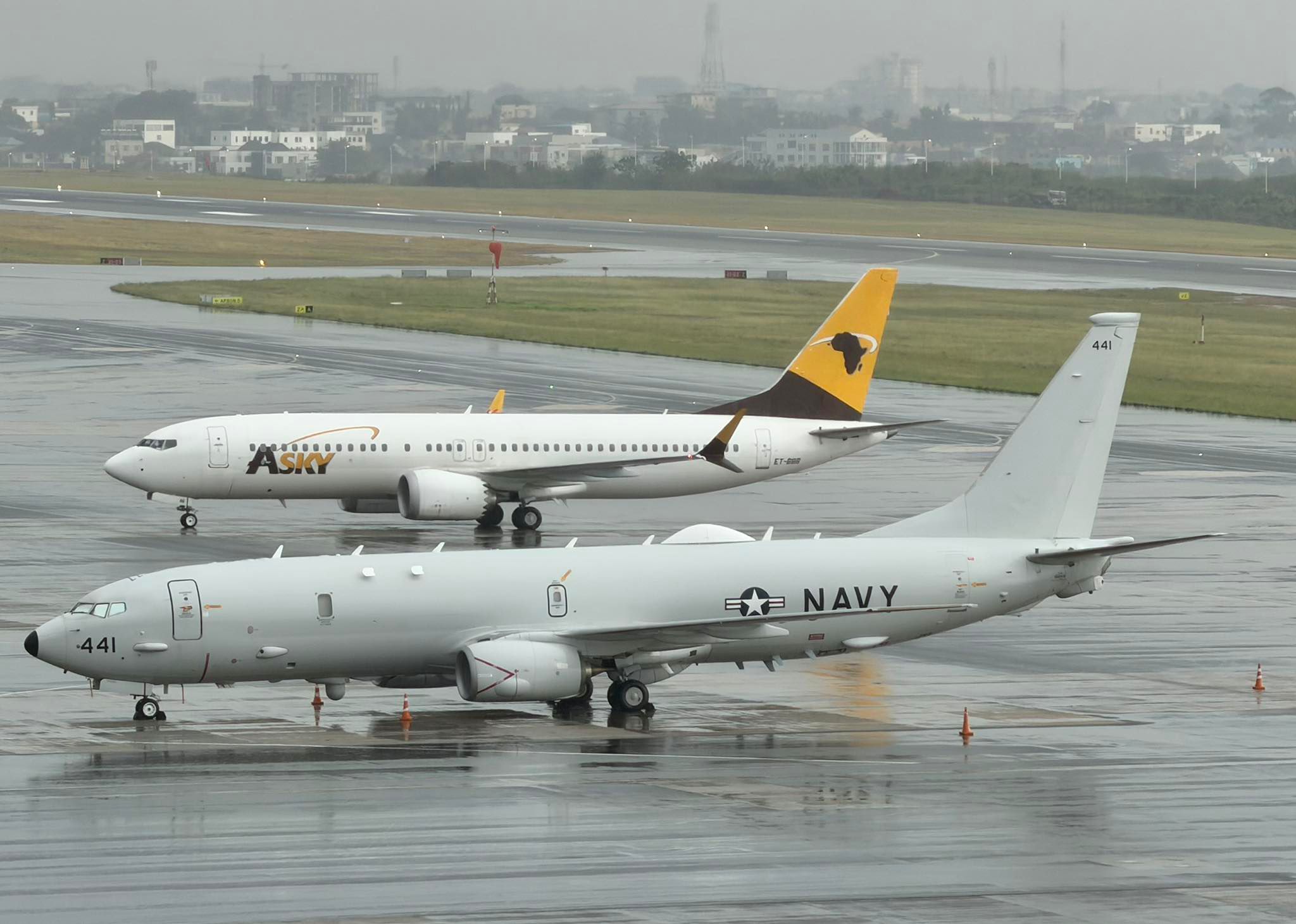
One of the other special P-8A’s was photographed at Accra Kotoka Airport (ACC) on Friday November 7, 2025. This is 168854 (c/n 44146/5368) as 168441. Clearly visible is the large hump on top of the fuselage. Which makes this visit really interesting is that according eisnspotter on X the other secret C-40, N972BJ, also flew to Accra. This was on November 1 as flight RCH335.
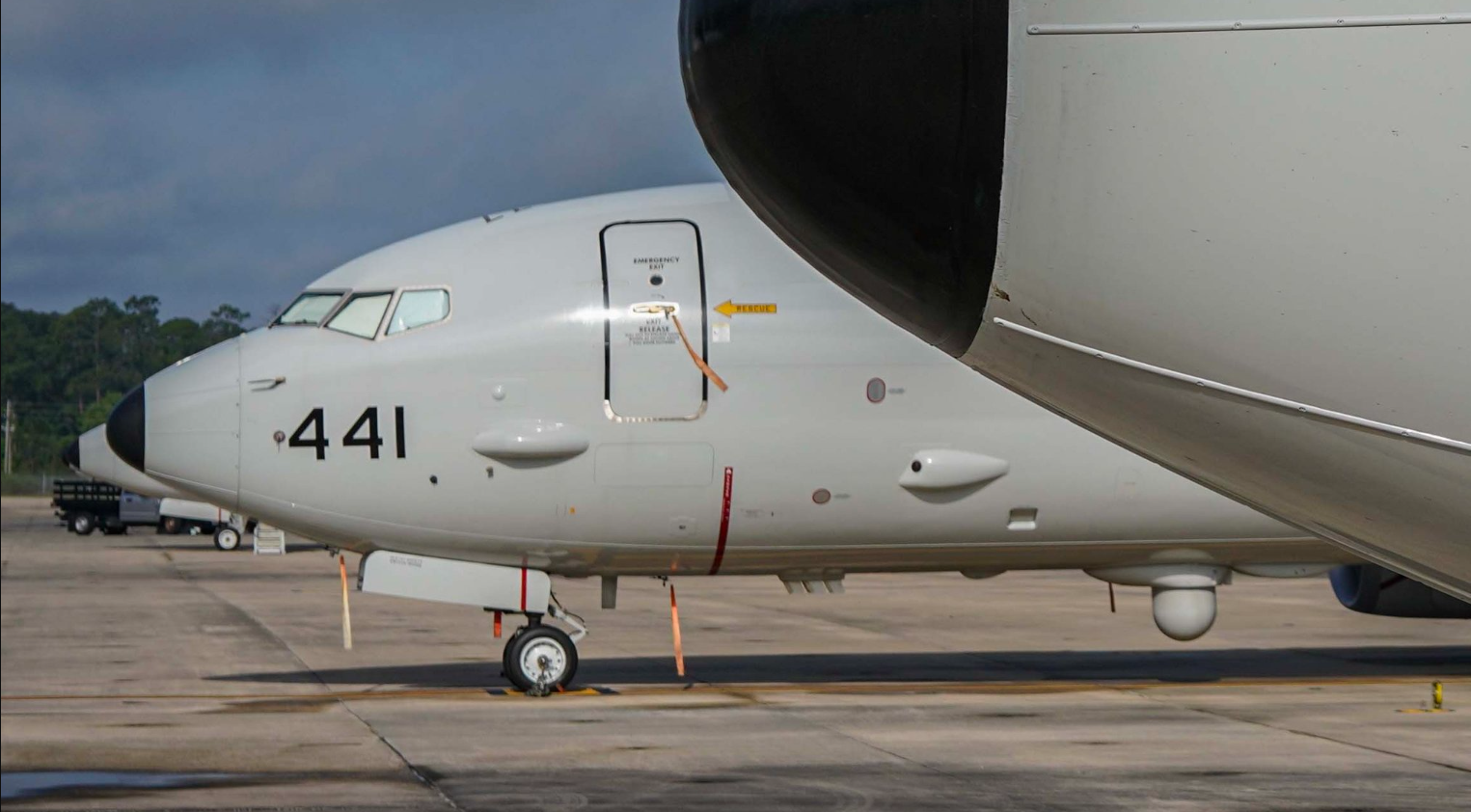
Also unique is the hump at the underside, near the window for observations. This is a closeup of the same aircraft.
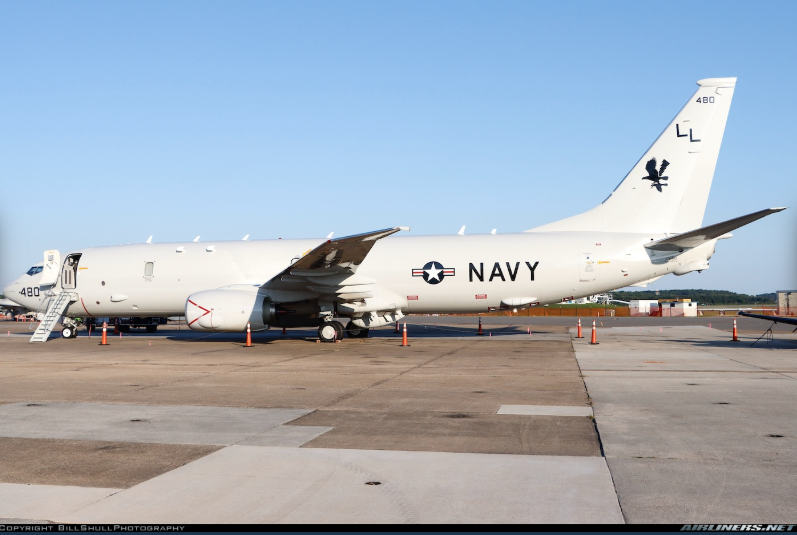
A ‘ normal’ US Navy P-8A can be seen in the photo below. Photo by BillShullPhotography.
According to movement records:
- N235JF arrived on October 14 from Homestead, Florida.
- The P-8 arrived on October 20.
- The AC-130J arrived on November 1 from Roosevelt Roads, Puerto Rico.
On November 5, The New York Times reported that the deployment marked what appears to be the first known instance of a foreign country hosting U.S. aircraft that could directly conduct strike missions in the region. Two U.S. military officials, speaking anonymously, confirmed that the deployment is linked to a surge in counternarcotics operations targeting maritime trafficking routes.
Times analysis of publicly available radio traffic found:
- The P-8A has flown at least six missions from El Salvador.
- The AC-130J and the C-40 have each flown at least one mission.
However, other sources say the C-40 flew almost every say since it arrived in El Salvador.
The role of the U.S. Navy P-8 during this deployment in El Salvador is very likely to locate boats transporting drugs. The AC-130 is equipped with a number of cannons and missiles; the aircraft is specifically designed to destroy targets on the ground. In this case, its role would be to disable drug-smuggling vessels.
The C-40 will likely have a coordinating role. Specialists may be on board who can determine whether a boat is indeed carrying drugs. The C-40 may also have the capability to intercept phone or other radio communications.
Assessment
The concurrent presence of N235JF and a U.S. Navy P-8 suggests the C-40’s role extends beyond transport. Its configuration and deployment pattern are consistent with airborne command, control, and communications relay, coordinating intelligence feeds between surveillance aircraft and ground or maritime interdiction forces.
In effect, N235JF appears to operate as a mission coordination platform supporting U.S. counternarcotics and maritime interdiction operations.
The photos in the below shown post on X were published in this article by The Latin American Aviation Historical Society.
The photo on the top of the article was made by SR_planespotter