Analysis of the MD-87 crash at Houston Executive airport at October 19
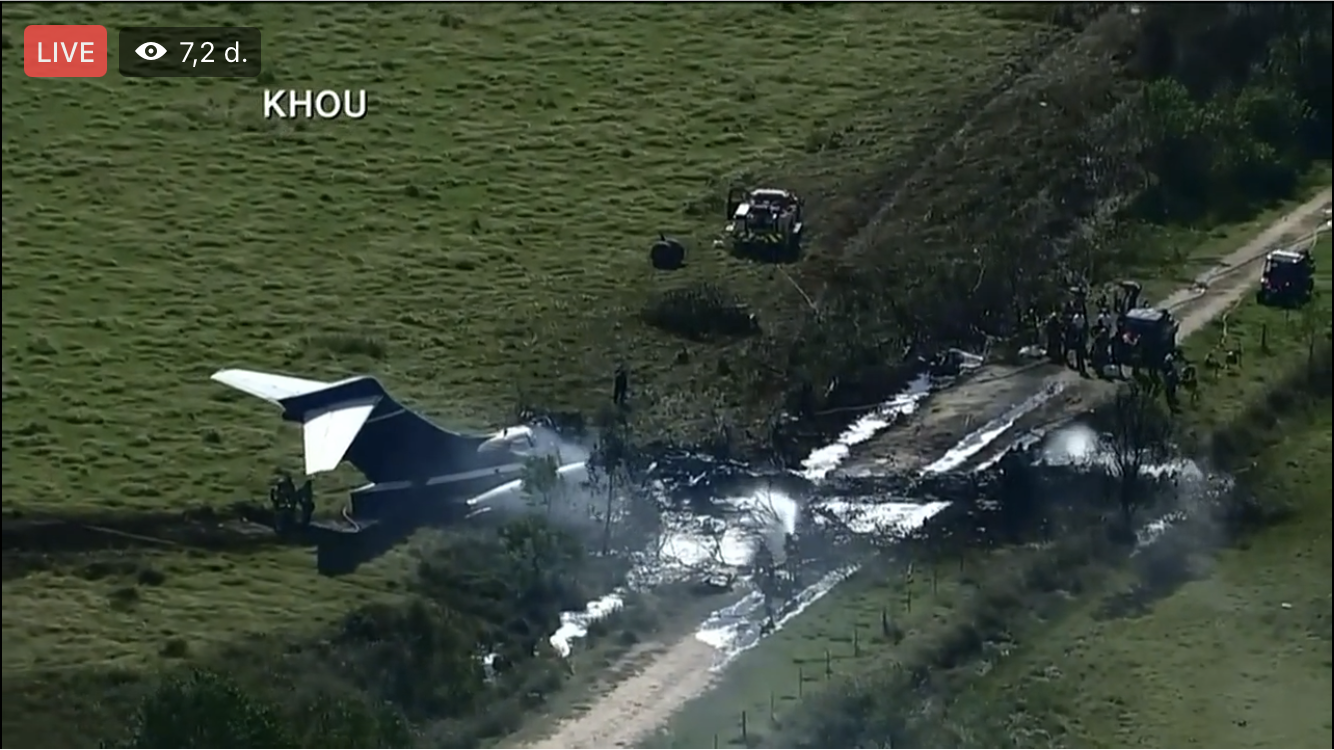
A corporate DC9-87 (MD-87) registered N987AK crashed during the takeoff at Houston Executive Airport. The 21 persons on board the aircraft could all escape. Just two persons had minor injuries. The aircraft was writte off.
The aircraft flightplan said the destination was Boston Logon airport. The 34 years old MD-87 was registered to 987 Investments LLC. The aircraft was owned by James Alan Kent, a prominent Houston developer and rodeo director. Kent is the owner of Flair Builders, a Houston-based custom homebuilder.
The aircraft was taking off from runway 36 at Houston Executive Airport. The aircraft was unable to lift, went throuh the airport fence, crossed a road, hit a powerline, the left wing hit trees. Around 500 meters past the runway threshold the aicraft came to a rest. The 3 crew (2 pilots and a flight engineer, 18 passengers) could escape the aircraft. During the evacuation the aircraft was already on fire.
Aircraft hardly flew
The aircraft was based at Houston Executive airport. In 2021 the aircraft did just two flights. Remarkable the NTSB who is investigating the crash stated the last flight of the aircraft was in December 2020. However ADSBexchange, a website which tracks planes worldwide. shows the aircraft made two flights in 2021.
At April 21 the aircraft departed Houston Executive, made a stop at Laredo airport and continued heading towards Mexico. At April 26 the aircraft returned to Houston. It was first tracked over Mexico. Landed at Laredo. And then continued to Houston.
ADSBexchange does not show any other flights of the aircraft in 2021! It also does not show any flight in December 2020 despite NTSB stating in December the aircraft did it last flight.
Satellite photos shows the aircraft was likely parked at Houston Executive all the times satellite photos were made. The resolution of the photos is such the MD-87 cannot be recognized but there appears to be a large plane parked at the same spot photos taken at the ground show the MD-87. (thanks Gerjon for making the animation)
It is unlikely the aircraft is parked in one of the hangars at Houston Exective.
Video made by a surveillance camera at the airport show the aircraft taxi to the begining of the runway. Also a video was made public showing the first phase of the takeoff. Right after full thrust was applied a puff of white smoke can be observed from the left engine. Not known is what caused this.
The aircraft might have a had enough fuel onboard to make the trip to boston and back without having to refuel. someone syated on airlines.net “N987AK might have been fairly heavy, tanking enough fuel to make the trip out and back from KBOS. Jet A at KTME Houston is $5.00 per gallon, but at KBOS Boston it is $9.37 per gallon.”
What happened?
The aircraft seemed to make a normal takeoff. On a video it seems the flaps were in the takeoff position. Right at the beginning of the takeoff run smoke originated from the left engine. Data by ADSBexchange showed the aircraft reached a maximum speed of 150 knots before things went wrong.
The video made from a surveillance camera at the jet center shows that the aircraft was still accelerating at around 1100 meters from the beginning of the runway. The total length of the runway is 2000 meters.
The aircraft did not rotate when the V1 speed (rotate speed) was reached. According to a passenger who whas onboard the aircraft first one pilot pulled the yoke, then the other. However the aircraft did not rotate. Then the brakes were used. The NTSB noticed around 1200 feet of brake marks were observed on the runway. The grass behind the threshold also shows marks made by the landinggear. It indicates a rejected takeoff (RTO) procedure was executed by the pilots.
It is not known if the thrust reversers (the buckets at the end of the engine) were used to reduce the speed of the aircraft. In many procedures it states that once the aircraft has come to a stop, and before the evacuation starts, the thrust reversers are stowed in the normal position.
Also noted is that once the aircraft came to a stop, the right engine seemed to be still running. The grass area behind that engine is burned while the area behind the left engine seems to be not changed at all.

What could have caused this crash?
In general an aircraft crash can be caused by one of these causes or a combination:
- pilot error
- technical issue(s)
- weather related
The weather was fine at the time of the crash. Winds were <7 kts and variable and the runway was dry. So it seems extremely unlikely weather played a part in the cause.
Various things could have gone wrong. Did an engine have a technical issue so the speed was not enough to be able to rotate? This does not seem to be likely. One of the passengers who was on board was told by one of the pilots right after the evacuation that both pilots pulled the joke.
Another cause could be an incorrect configuration of the slats and flaps. A Spanair MD-82v crashed in 1982 in Madrid because the flaps were not set. The alarm which normally alerts the crew for an incorrect setting did not function.
Did the pilots not use the correct setting for flaps and/or slats? Someone of Pprune forum wrote:
As former MD-80 licensed engineer I can confirm that, from that video seen, slats and flaps were deployed as expected. Amount of flaps is defined by C.G. position via simple mechanical dial on the pedestal, therefore amount of flaps for T/O is relatively small – as expected.
Puff of smoke is significant and far from “normal” or “expected considering the age”. I dispatched MD-80 countless times and I never saw something like this – if I saw that, I would certainly raise a flag.
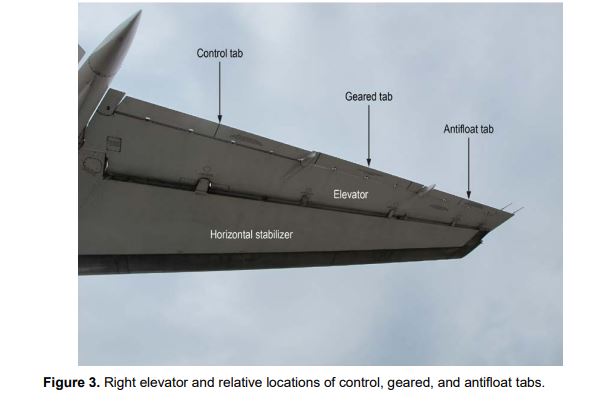
A possible cause could be a jammed elevator.
A scenario could be like this:
At V1 (the maximum speed at which the aircraft can be brought to a safe stop before reaching the end of the runway) there was nothing wrong. At Vr (the speed at which the aircraf is capable to fly) the pilot flying pulled the yoke but the nose of the aircraft did not go up. The other pilot might have tried to pull the yoke. Meanwhile seconds were lost and the aircraft came closer to the end of the runway. Then one of the pilots started the Rejected TakeOff procedure. To late as the speed of the aircraft was far beyond V1.
A jammed elevator was the reason for the runway overrun by a Ameristar Air Cargo MD-83 on March 8, 2017. Nobody on board the aircraft was hurt as a result of the very good reaction of the pilots. The NTSB report states that due to very high wind speed combined with the location of the aircraft near a hanger caused the elevator to be jammed. . The elevator system (by design) has no gust lock, and the elevators are not interconnectedIit does have a damper to prevent rapid elevator movement in windy conditions.
Mentour Pilot made a great video explaining the runway excursion at Willow Run here. Highly recommended to view.
Now the MD-87 at Houston Executive airport was parked outside all the time since its last flight from Mexico in April. The hangers at Houston cannot be used to the park the aircraft. Texas is known for its hurricanes. So could high wind speeds have jammed the elevator? Mind the pilots have no way to find out if the elevator is jammed. Only when the nose does not lift a jammed elevator can be detected.
The Aircraft Maintenance Manual (AMM) for the Boeing MD-83 includes a warning that the airplane must be parked headed into
the wind if gusts were expected to exceed 60 kts and a caution that visual and physical inspections of all flight control surfaces were required if the airplane was subjected to wind exceeding 65 kts.
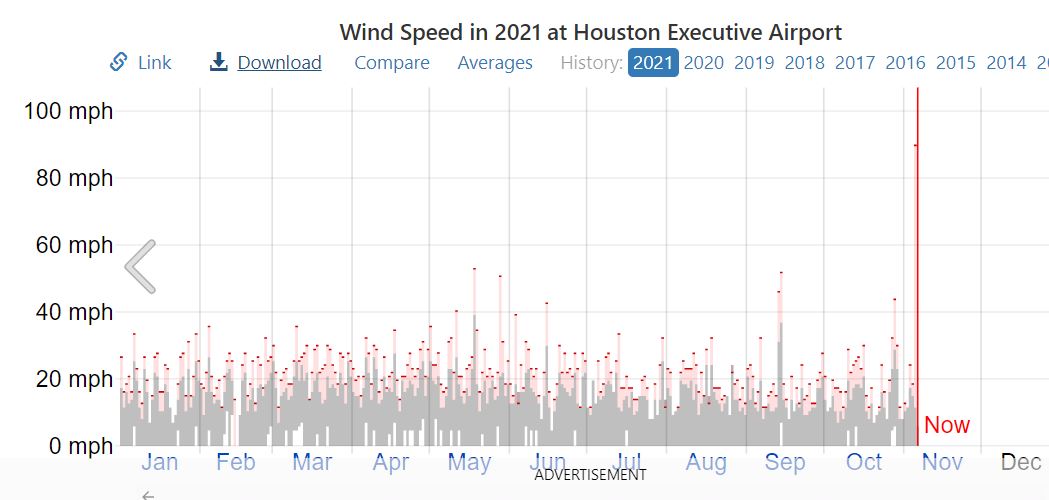
Maximum Wind gusts at Houston between and the date of the crash never exceeded 55 miles per hour (47 knots) . It does not seem to be very likely the wind casued the elevator to jam.
What else could be the cause?
If the wind did not jam the elevator, what else? It could be a maintenance engineer made a mistake which caused the elevator to malfunction. Maybe a screwdriver was left. We need to wait for the NTSB investigation results.
Crew
Known is the aircraft had two pilots and a flight engineer. As this aircraft did not fly for a commercial airline there was no need to have flight attendants on-board. The flight engineer opened one of the doors after the crash and helped the evacuation.
As the aircraft hardly flew it is not likely the pilots were employed by the owner of the aircraft. Likely the pilots were contract pilots. This means the pilots are hired on a daily basis and paid per flight. The pilots have to pay their training themselves. This raises questions about the cockpit crew management, how experienced the pilots were on this type of aircraft and if they complied to the requirements on training and keeping the license current. A couple of crashes of corporate jets were caused by human error by pilots on a contract.
Conclusion
A likely cause of the crash is a malfunction of the elevator or the control tab combined with a late response of the cockpit crew when the nose did not lift after pulling the yoke.