
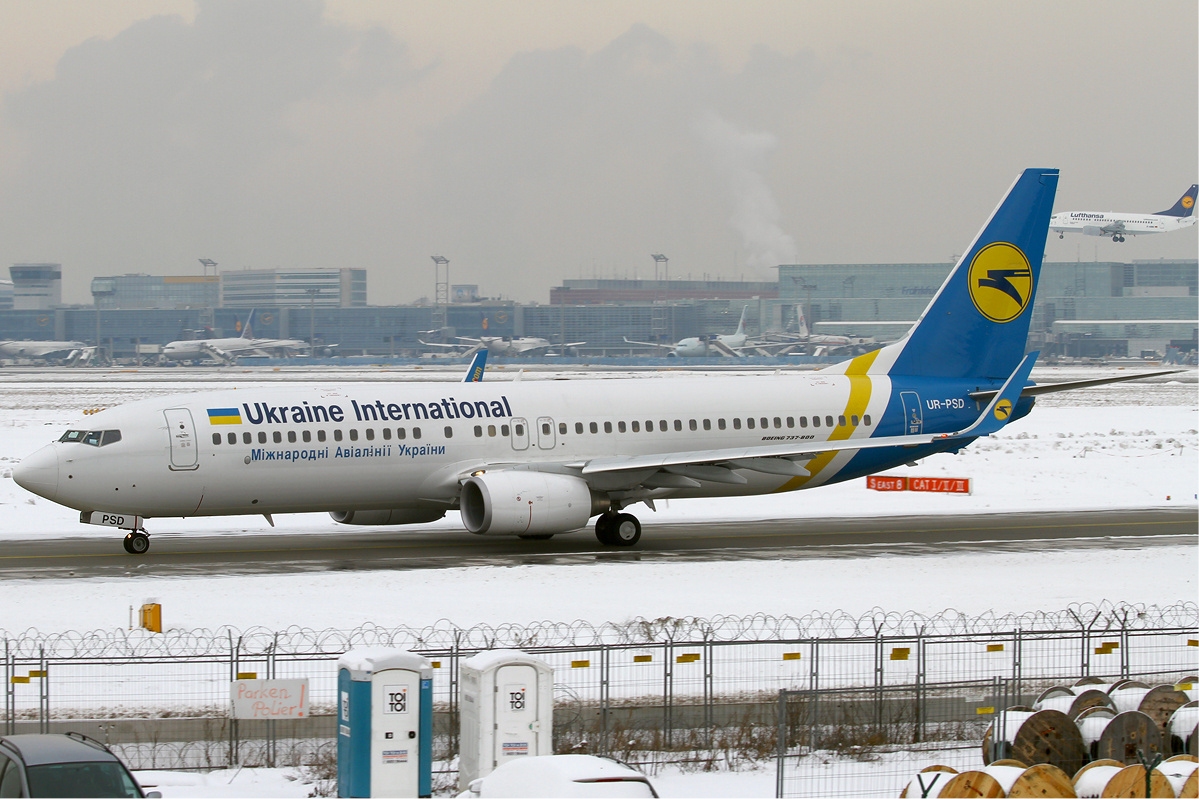
What caused the crash of Ukraine International Boeing 737 near Tehran?
Latest update: January 14, 20:00 GMT
Update: a new video was posted showing the launch of two missiles
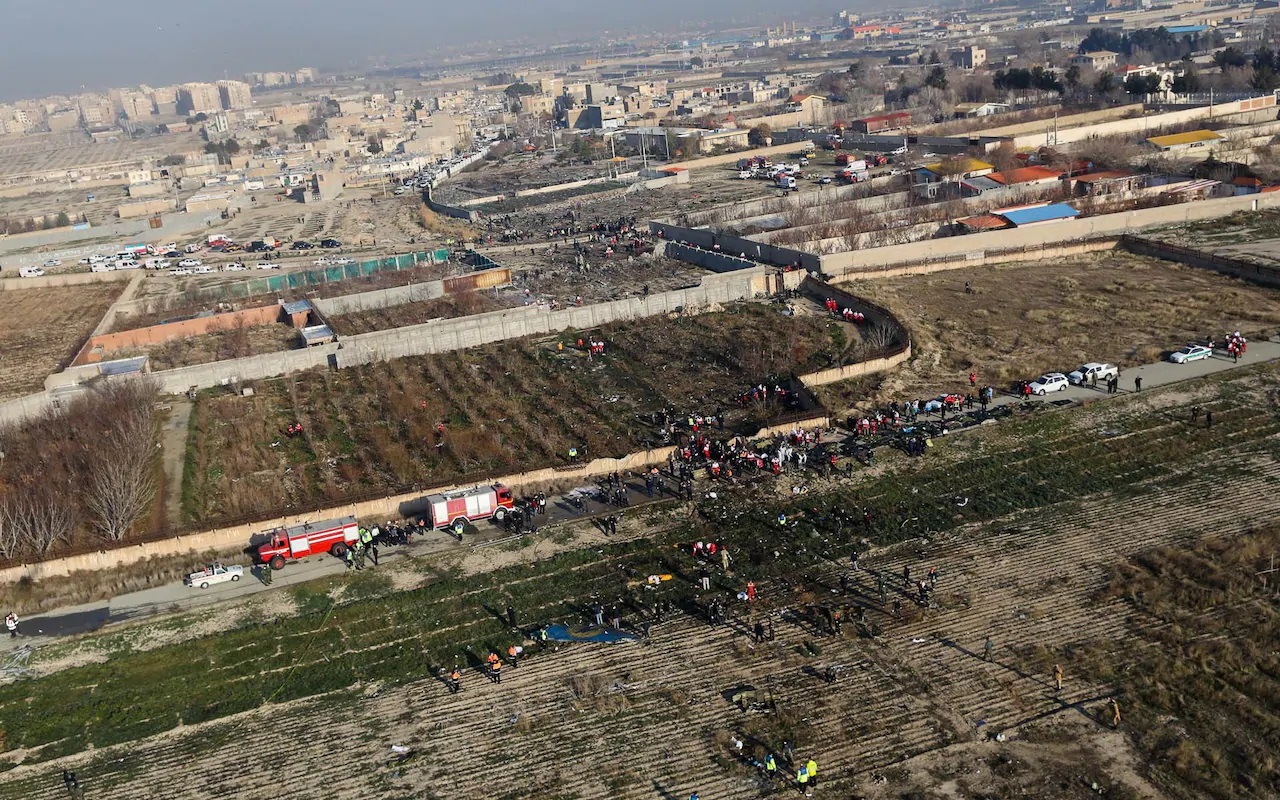
An Ukraine International Boeing 737-800 crashed minutes after take-off from Tehran International airport killing all 167 passengers and 9 crew (Iran – 82, Canada – 63, Ukraine – 2 + 9 (crew), Sweden – 10m Afghanistan – 4m Germany – 3, United Kingdom – 3)
The crash happened hours about Iran launch multiple ballistic missiles to military bases in Iraq. Iranian defense was on high alert as the United States could strike back and hit targets in Iran. President Trump stated he would retaliate if Iran attacked US troops in Iraq.
The aircraft departed an hour after its scheduled time of departure. The airline says the holdup was a baggage-related delay, as the pilot was concerned the aircraft was overweight. Out of an abundance of safety, the pilot ordered an unusually large number of suitcases — 80 in total — to be taken off the plane.
After initial deny at January 11 Iran admitted it downed the aircraft with a missile claiming it was a human mistake.
The Iranian military’s statement said the plane “took the flying posture and altitude of an enemy target” as it came close to an Islamic Revolutionary Guards Corps base. It said that “under these circumstances, because of human error,” the plane “came under fire.”
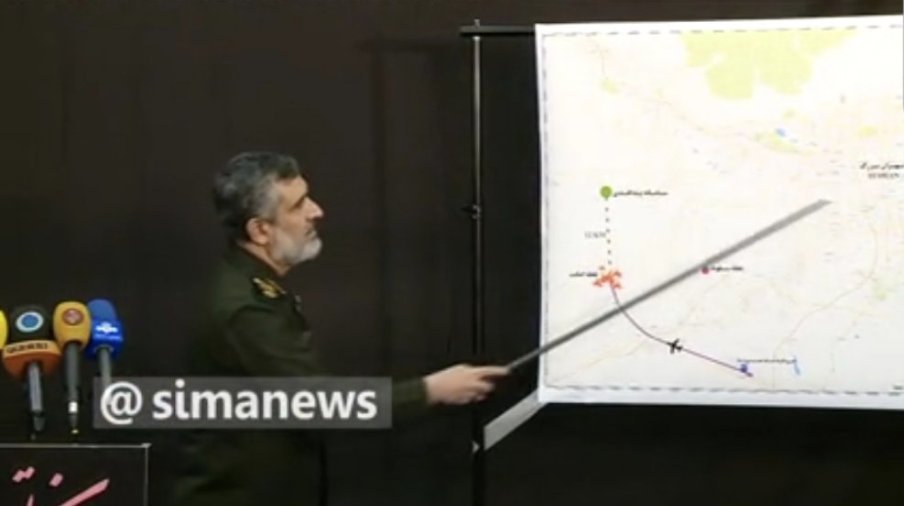
According to Hajizadeh, the commander of the Aerospace Force of the Islamic Revolutionary Guard Corps, Iranian air defence systems mistook the Boeing 737 for a cruise missile. (source). He stated that the anti-aircraft system was deployed to Bidganeh (بیدگنه), the green pin on his map, around 12 pm local time. Flight PS752 was about 19 km away from the system when its missile was launched, he says.
A lone operator of the Tor anti-aircraft missile launcher had to decide within ten seconds if he would launch a missile or nor. He could not communicate with his commanders due to communications issues.
Iran likely had to admit after the Ukraine investigation team on Friday evening found out there was shrapnel damage under the cockpit. Ukraine’s top security official Oleksiy Danilov has confirmed to the BBC that his country’s investigators in Tehran had gathered conclusive evidence of a missile strike before Iran changed its position overnight.
Why did Iran shot down the aircraft?
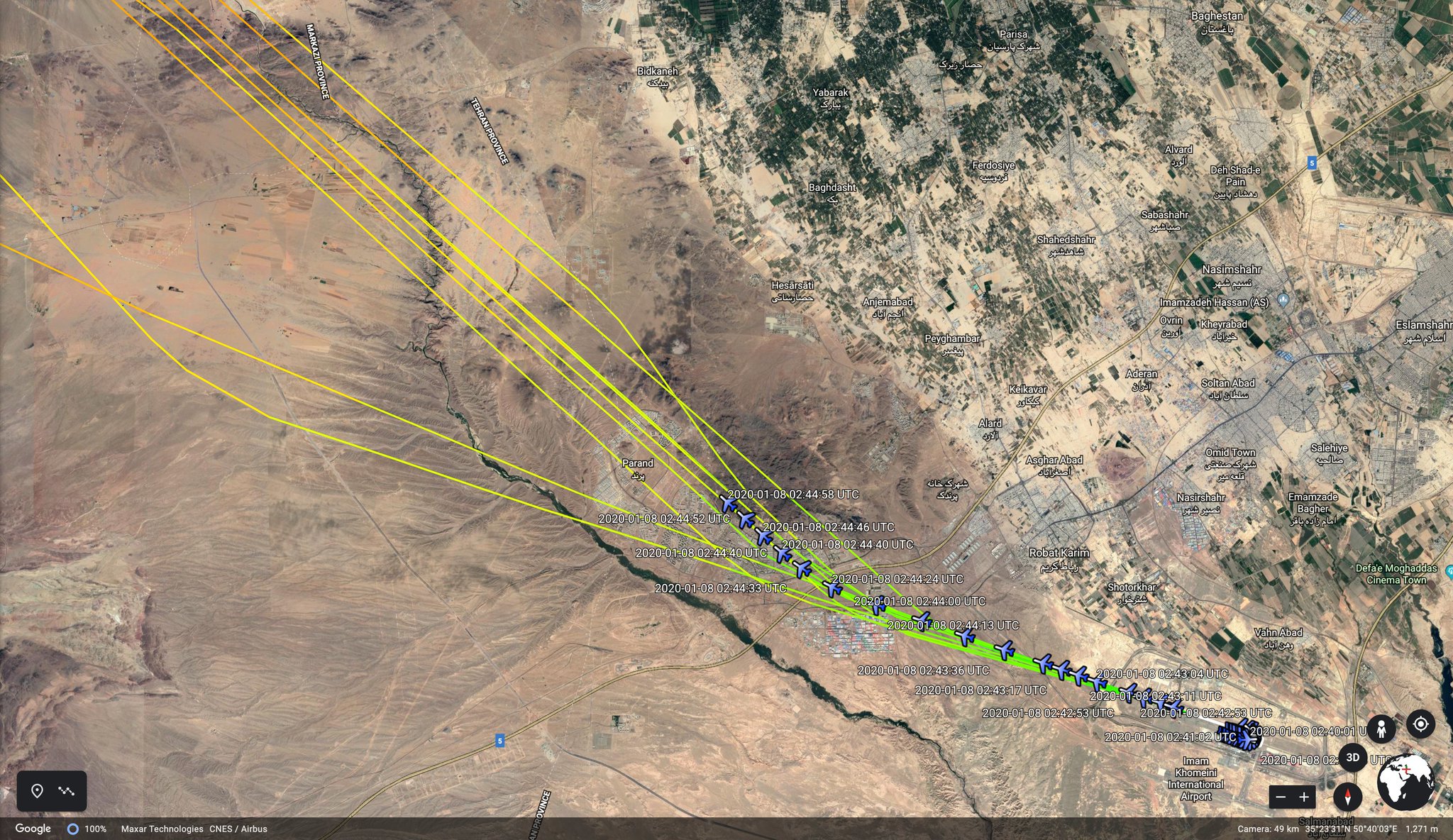
Now it is clear what caused the crash, many questions remain about the way. Iran stated the Ukraine aircraft was heading to a sensitive military installation. That is not the case. The Boeing flew a standard departure route from the Tehran airport. This image shows the departure routes of ten aircraft which departed earlier the same morning from Tehran airport. Course and altitude were totally normal.
Iran stated the target was believe to be a cruise missile. The American Tomahawk cruise missile travel at 550 miles per hour at an ultra low level. The Ukrainian Boeing was flying at a speed of around 345 miles per hour at 8000 feet when it was hit. Completely out of the normal mode of a cruise missile.
Additionally to Radar Cross Section of a Boeing 737 is completely different from the RCS of a cruise missile. The RCS is an indication of the size of a target. Based on the RCS the operator is able to distinguish target. The RCS of a Boeing is around 100m2. That of a cruise missile 0,5 m2.
Was the Tor missile launcher connected to a battery and did the commander inside the vehicle had information about aircraft flying in the area? Maybe the commander was told the airport was closed. We do not know.
Flight data showed the aircraft registered UR-PSR took off Wednesday morning, then stopped sending data , according to website FlightRadar24. Two minutes and 24 seconds elapsed between the first airborne transmission (at about 350′ AAL) and the last received at FL80.
The initial assessment of Western intelligence agencies is that a Ukrainian airliner which crashed in Iran on Wednesday was not brought down by a missile, said a Canadian security source, Reuters reported . The agencies believe the most likely cause of the crash was a malfunction, the source added, saying there was some evidence one of the plane’s engines had overheated.
According Iranian media the crew did not declare an emergency
The plane had been last serviced two days before the accident, according to the airline.
Ukrainian president Zelenskiy says he instructed prosecutors to open criminal proceedings.
Iran stated it will not give the black boxes to Boeing or US aviation authorities. There is actually no need for that. The state where an aviation incident took place is in the lead of the investigation. This state decided where the black boxes are analysed. As this is highly technical job only a limited number of states are able to do the analyses. Likely the black boxes are sent to France.
A video made of the aircraft shows the aircraft is in their air but on fire. Some parts of the aircraft which are on fire seem to separate from the aircraft.
Later on January 8 a second video was published (source). This was filmed from a different angle from inside a driving car. It shows the aircraft on flames second before crashing.
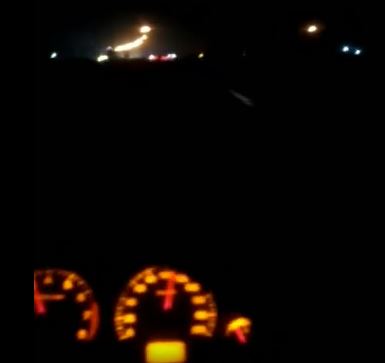
The man in this video says the righthandside of the aircraft until the tail was on fire.
Jordanian news outlet Al Hadath reported the Ukrainian aircraft was accidentally shot down by Iranian anti-aircraft units. However this is still unconfirmed. The Ukrainian embassy in Tehran has said the aircraft came down as a result of engine failure, not terrorist actions. But soon later the message was retracted.
It could be the aircraft ACARS system, which is used to transmit data on the status of the aircraft to the operational center of the airline, indicated engine problems.
Two possible causes of the crash are the aircraft was hit by a missile or the engine exploded and hit the fuel tanks which resulted in an explosion. An engine which explodes is called ‘Uncontained engine failure”.
Shot down by a missile admitted by Iran
At Wednesday January 8 two photos were distributed on social media showing the nose of a Russian built surface to air missile of type 9M331 which is used by a Tor-M1 system in use by the Iranian armed forces. Detailled information on the Tor-M1 and the 9M331 missile in Russian language here. This video shows severall launches of missiles by the Tor system.
New York Times in October 2012 reported about errors made by Iranian air defense units.
In June 2007, the report noted, a Revolutionary Guards air defense unit fired a TOR-M1 surface-to-air missile at a civilian airliner. In May 2008, an antiaircraft battery fired on an Iranian reconnaissance drone and a civilian airliner. That same month, an antiaircraft battery fired on an Iranian F-14 fighter jet. In June 2008, soon after the Israeli air exercise, Iranian air defense units fired at two more civilian aircraft.
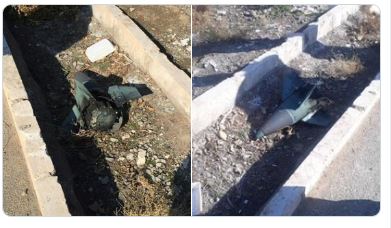
This nose is very similar to other photos showing noses of 9M331 missile seen in Eastern Ukraine.
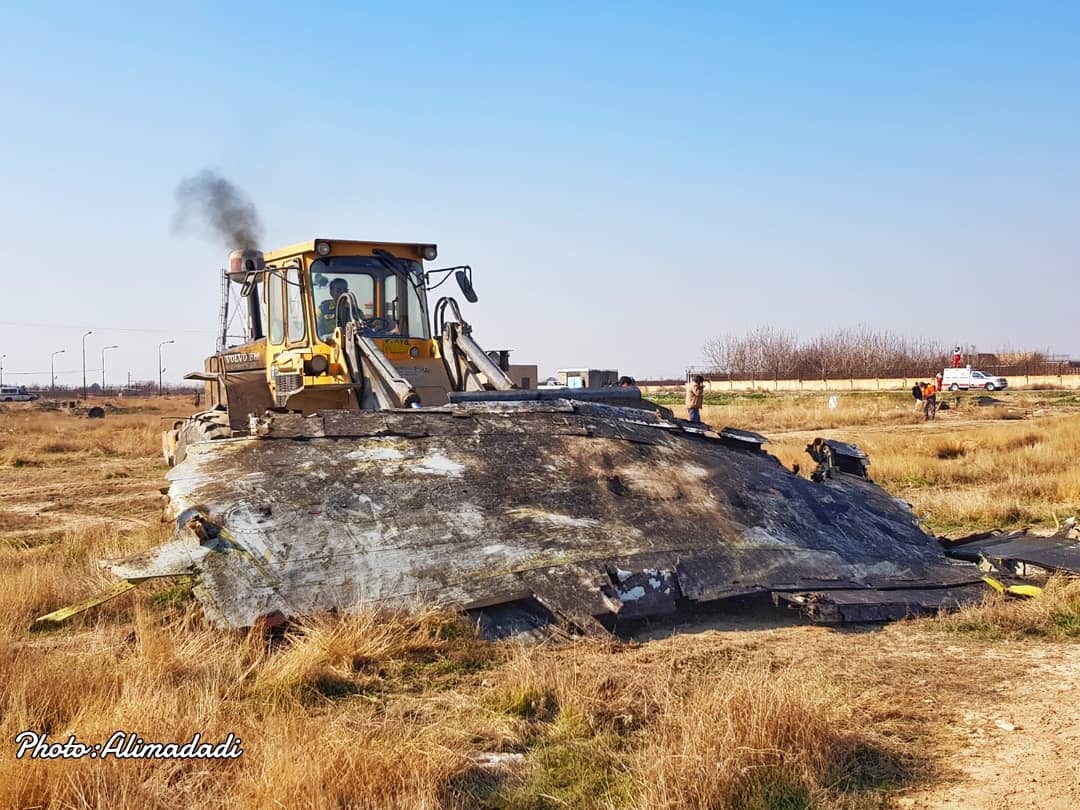
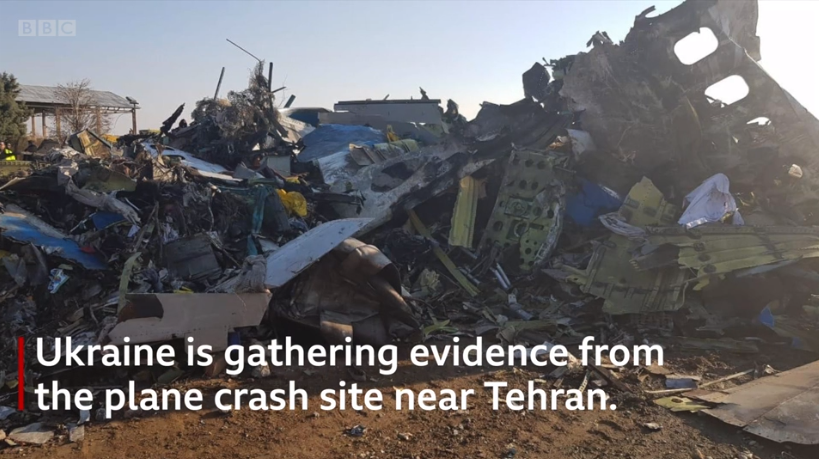
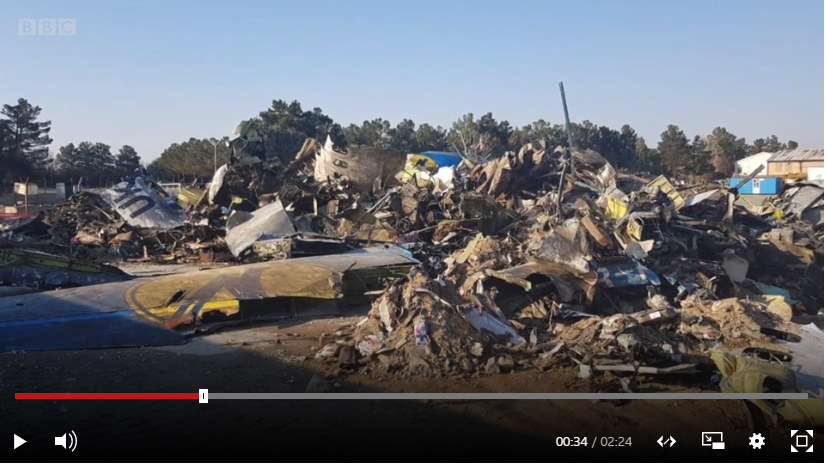
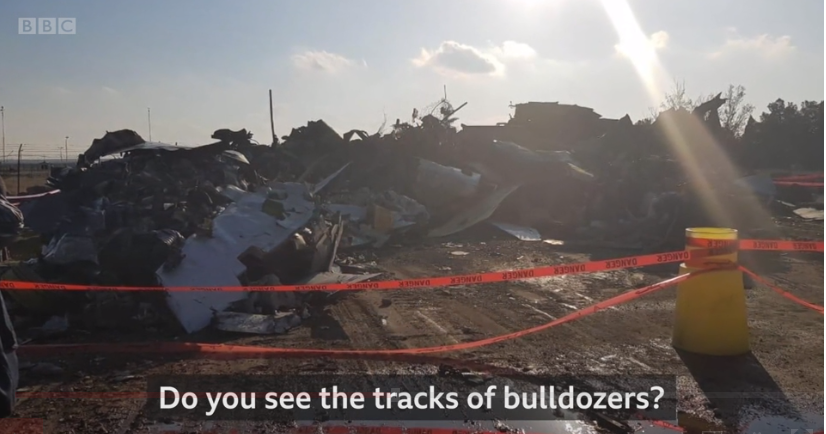
At Thursday January 9 bulldozers were removing debris from the crashsite.
At Thursday January 9 US media reported that U.S. officials are confident Iran shot down a Ukrainian jetliner in the hours after the Iranian missile attack on U.S. targets earlier this week.
U.S. intelligence picked up signals of a radar being turned on, sources told CBS News. U.S. satellites also detected two surface-to-air missile launches, which happened shortly before the plane exploded, CBS News was told.
On Jan 9th 2020 president Trump stated, “It is a tragic thing. Somebody could have made a mistake. The other side could have made a mistake. … It was flying in a pretty rough neighbourhood and somebody could have made a mistake . . . I have a feeling something very terrible happened, very devastating.”
At Thursday January 9 a new video was posted on social media showing what appears a missile closing in on an aircraft. Seconds after the explosion is seen the sound of a loud explosion can be heard.
Bellingcat geolocated the video was made from this location close to the Tehran airport. On Twitter Bellingcat stated:
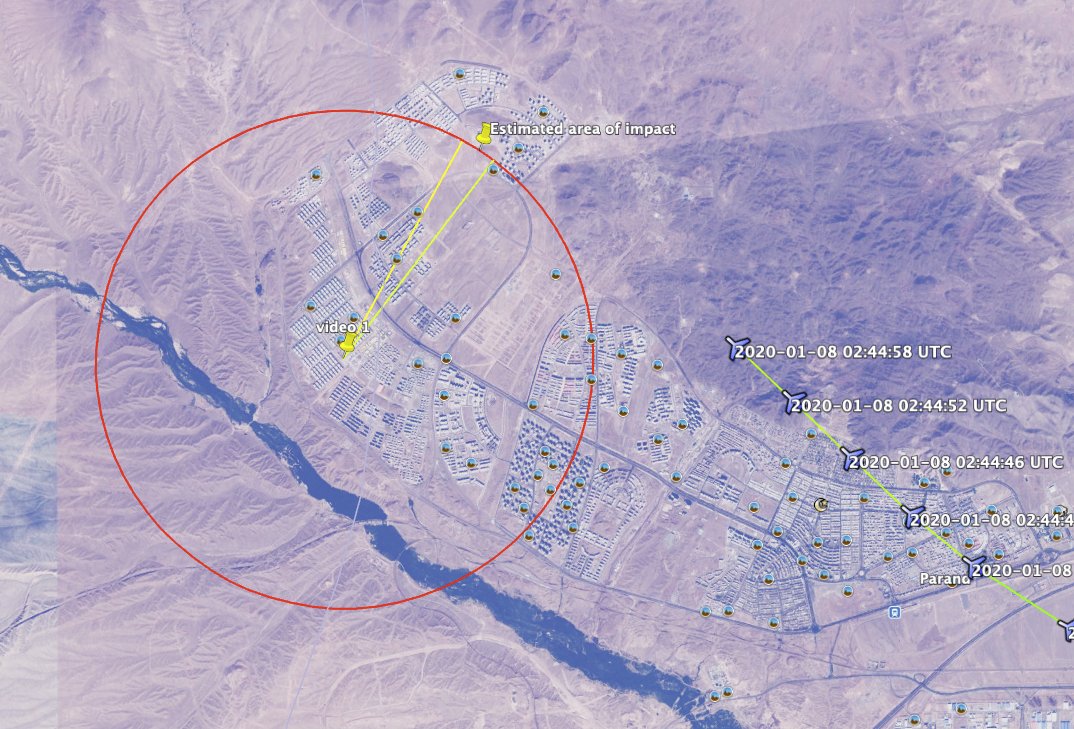
By measuring the time that it took for the camera to hear the explosion, we estimated the distance of the event (red circle), and cross-referenced it with the geolocation of the video and the flight trajectory of #PS752 (taken from from FlightRadar24).
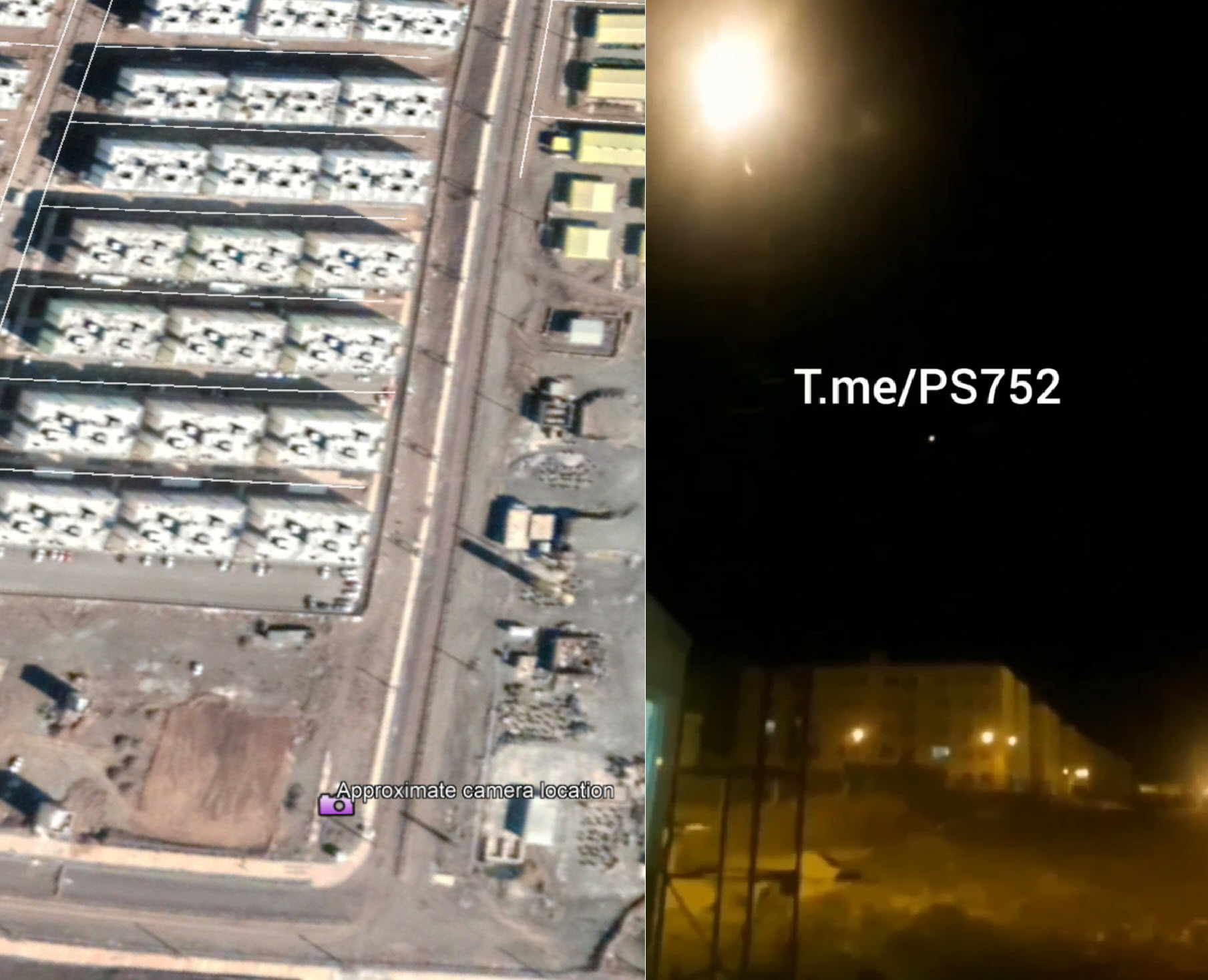
This shows the position of the maker of the video, the path of the aircraft and the location it crashed. (source)
Canadian PM Justin Trudeau addresses Tehran plane crash, saying, “evidence indicates that the plane was shot down by an Iranian surface-to-air missile” and stresses need for a “thorough investigation.”
“Canadians have questions and they deserve answers.” https://t.co/vCy4XBXcjH pic.twitter.com/I0HyTsp4Wt
An Iranian official said Thursday that it was “scientifically impossible” for one of their defense missiles struck the plane because of its altitude and the fact that no other planes in the area were harmed. (BusinessInsider)
At January 11 another video appeared on social media showing what appears to be the launch of a missile.
Christiaan Triebert geolocated the location where the video was made was in Parand.
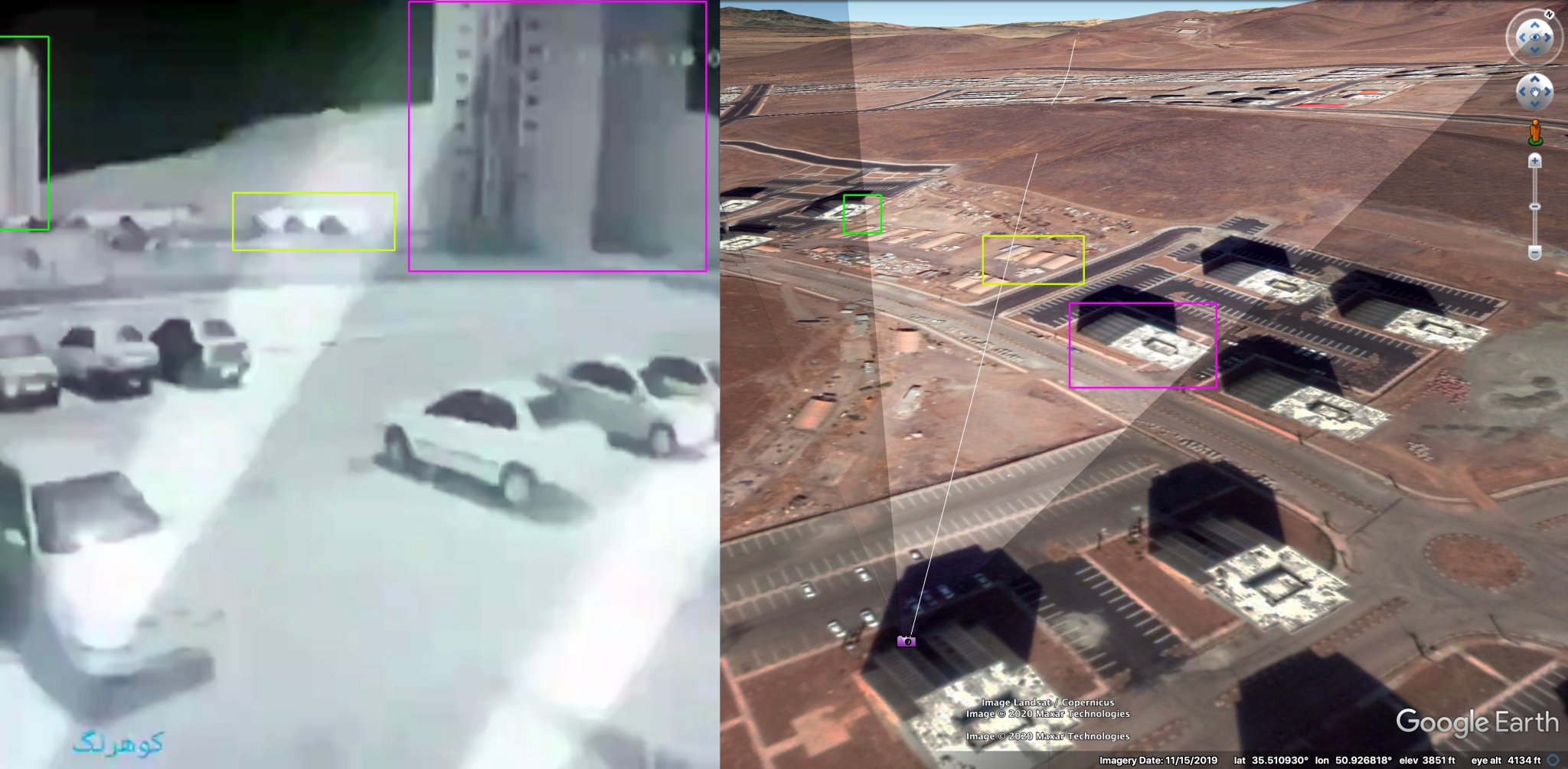
This map shows the locations where the above video was made and where the video was made showing a missile hitting a target. It also shows a Iran armed forces bases (in the green square) (source Christiaan Triebert)
An Ukrainian source likely working for the Ukraine team investigating the crash told the team discovered on Friday that the aircraft was downed by a missile. (source). A missile hit under the cockpit.
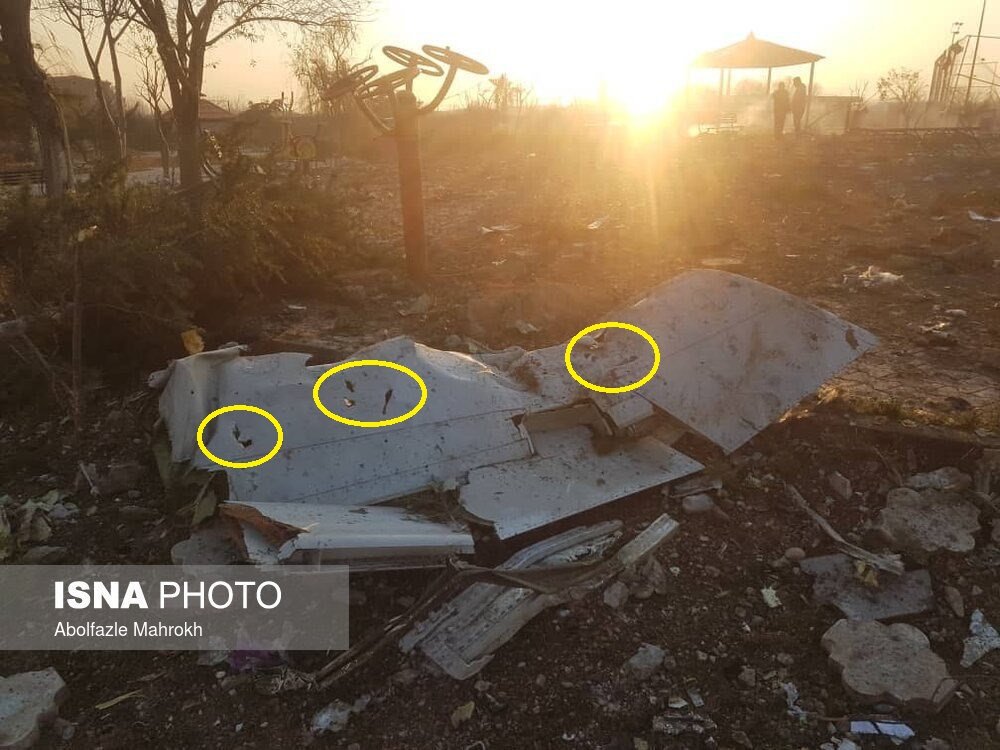
Several photos showing shrapnel damage were posted on Facebook
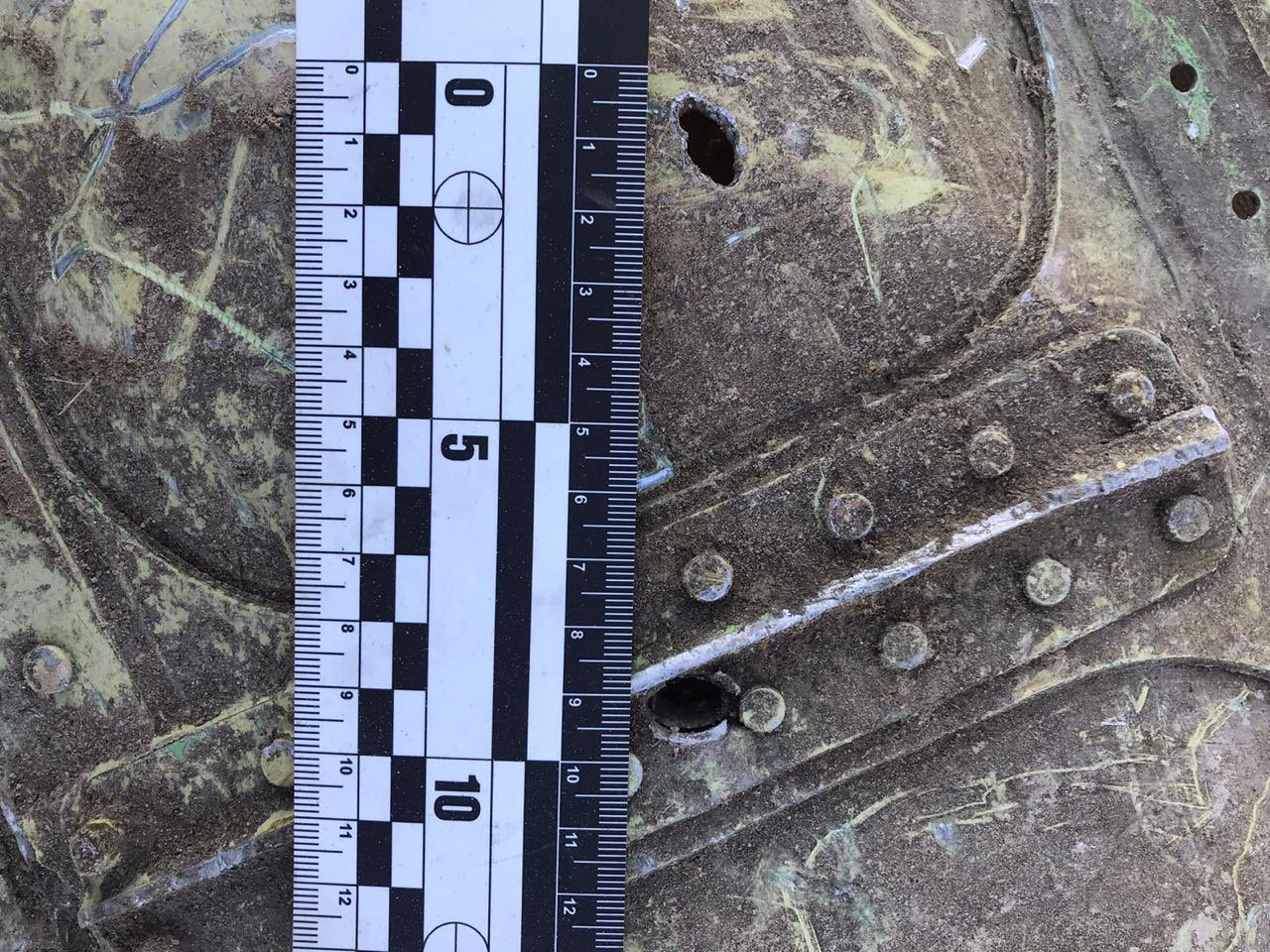
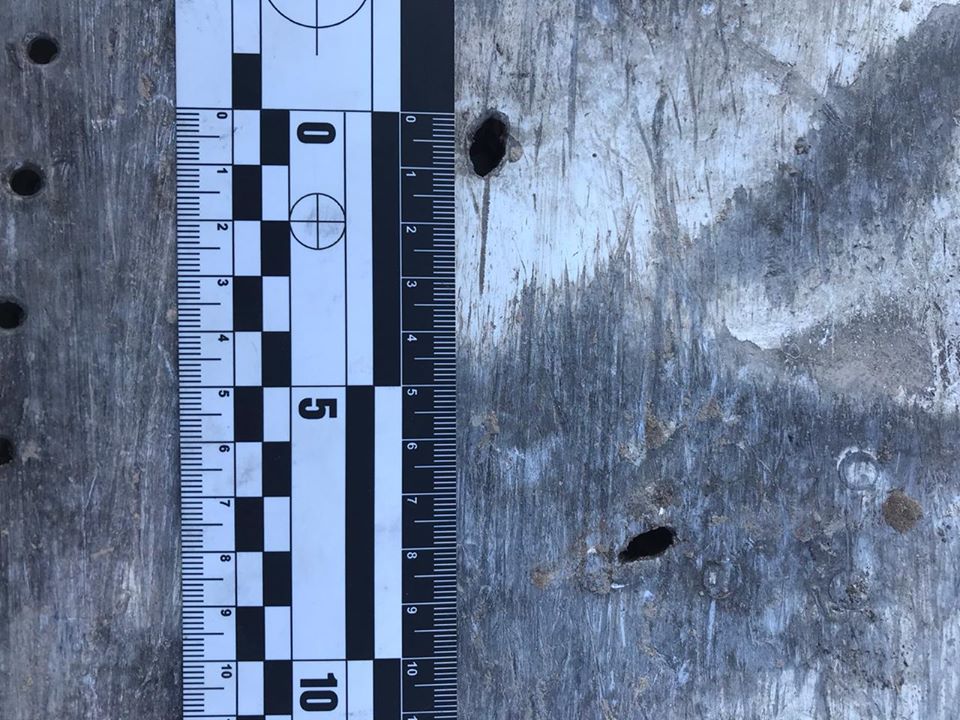
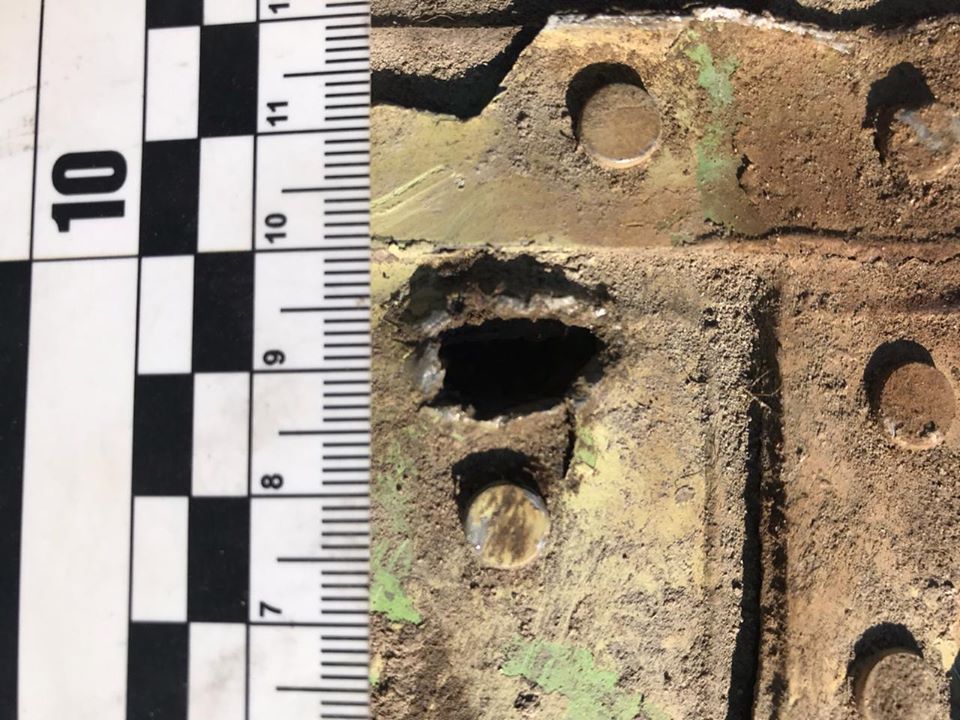
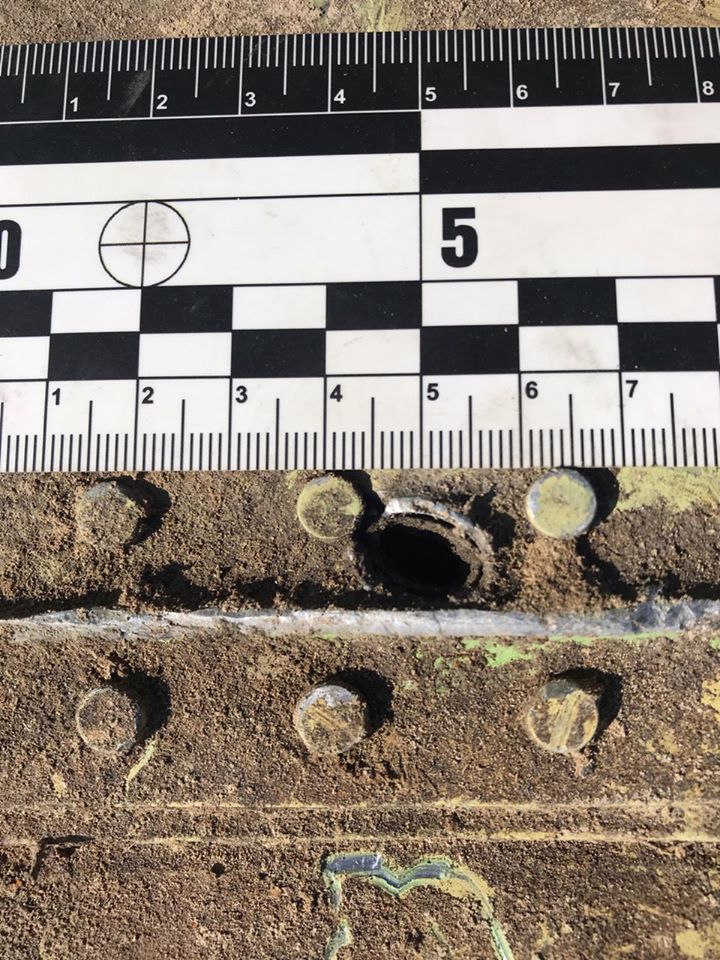
At January 13 a video was posted on YouTube showing the launch of two missiles. The first missile probably hit the underside of the cockpit destroying the ADS/B signal. 30 seconds later a second missile is launched.
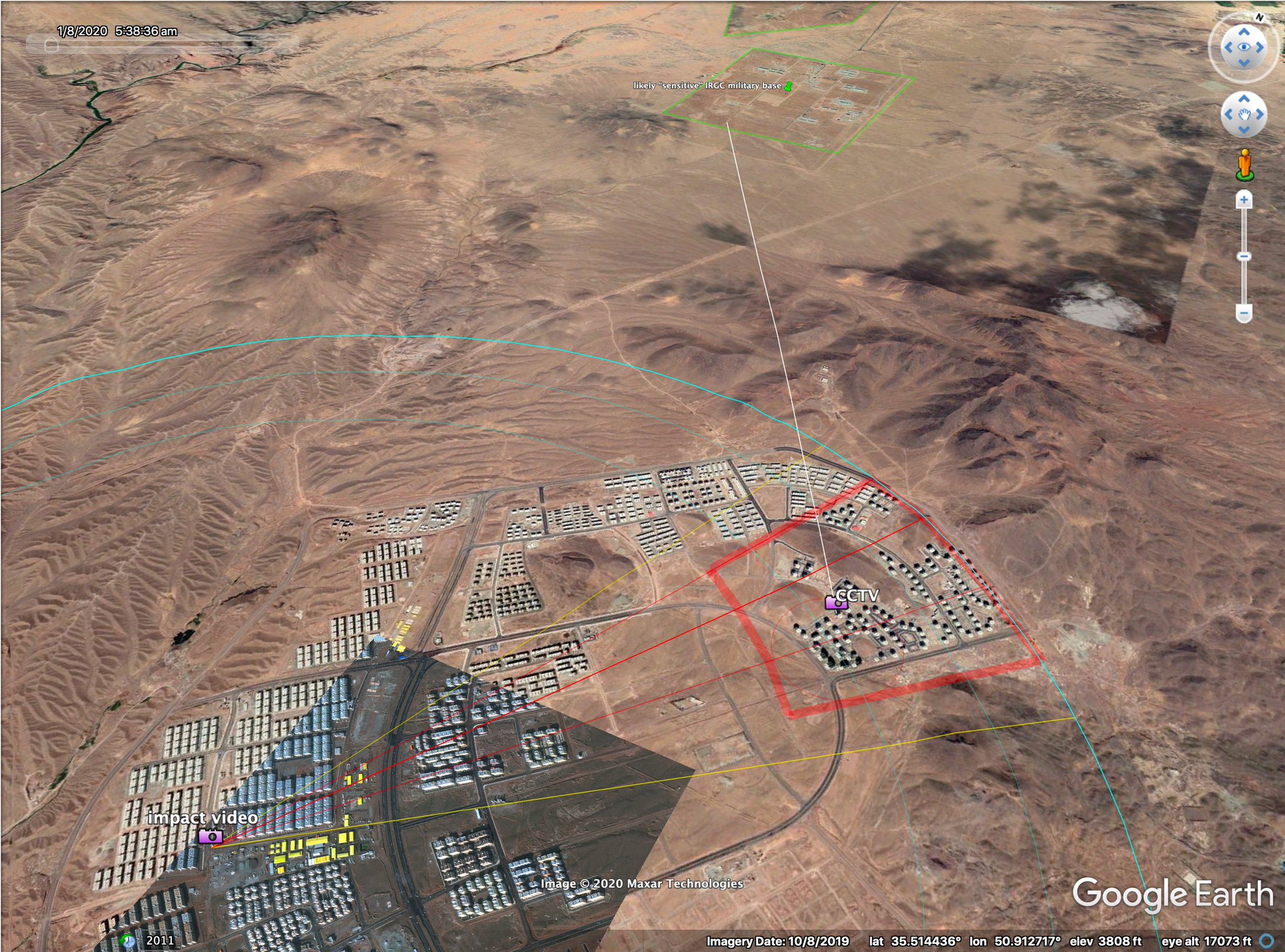
The New York Times has confirmed that the new video was filmed by a camera on the roof of a building near the village of Bidkaneh, four miles from an Iranian military site. Amir Ali Hajizadeh, commander of the Islamic Revolutionary Guards Corps’ airspace unit, said that missiles were launched from a base near there.
The exact coordinates of the location were not made know by NYT. A man who made the video showing the impact was allegedly arrested.
The date shown on the video is likely the Persian calendar. Date of crash is Jan 8th Gregorian, translates to 18th day of 10th month in Persian (2019-10-18). Security clock is likely out by a day (2019-10-17).
The launcher was likely in autonomous mode. Which means it is not connected to an upper command center and no approval is required if the criteria of the target is met. It means that if the crew spots a target on their radar screen from a certain direction they will launch a missile if the battery commander has given the command to launch.
The launcher was not in automatic mode. In that mode the computer of the launcher automatically launches missiles.
The second missile is launched 12 seconds after the explosion of the first missile. What this tells us is that the system CANNOT have been in automatic mode. If it was in automatic, a second missile would have been selected by the computer immediately upon launch of the first & the thermal batteries (to ignite the solid propellant motor) charged. Upon the explosion of the first missile, if there was still a radar return, the system would immediately launch a second missile (say 2 seconds after the first missile exploded).
This 12 second delay confirms that the SAM operator observed his “C” scope display & assumed he had missed as he still had a return after the first had exploded. He selected another missile and fired but there would be another delay of 3-4 seconds before launch as the thermal batteries ignited. I have no doubt that this was NOT an automatic firing (source)
New York Times made a very good reconstruction
Investigation
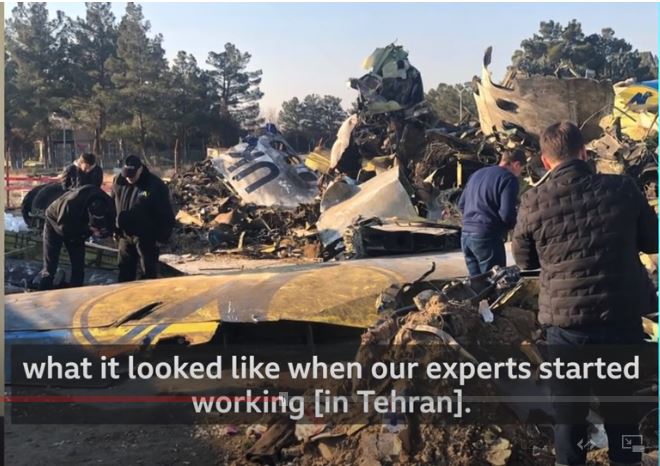
Oleksiy Danilov, the head of Ukraine’s National Security and Defence Council confirmed that parts of the aircraft recovered from the crash site have been taken to a nearby aircraft hangar where the destroyed plane is being recreated. (source)
At January 16 Ukraine official told about the investigation. It seems the Iranians tried to hide the crucial parts of the wreckage like the cockpit. But Ukraine experts found out about shrapnel damage. Iranian officials arrived at the scene and told they would deal with it. The next morning Iran made public a missile downed the aircraft. (source)
Uncontained engine failure scenario
Such Uncontained engine failure happen rarely and seldom this results to serious damage to the aicraft or a crash. In 1995 a ValuJet DC9-32 suffered an uncontained engine failure. Parts of the engine hit the main fuel line resulting in a fire.
https://twitter.com/aircrashmayday/status/1127655387426168833
In september 2019 the US Federal Aviation Administration is proposing that airlines be required to inspect and replace seals in high-pressure compressors of CFM International CFM56 turbofans to prevent the risk of uncontained seal failures.
In November 2019 the NTSB recommended Boeing to redesign the engine casing of the Boeing 737 Next Generation aircraft. Both the Southwest Boeing 737 which suffered an engine failure and the Ukraine Internation Boeing 737 are of the NG series. (source). Both had the same CFM56-7B engine. In two seperate events a fan separted off the engine (called FBO). In one case debris penetrated a cabin window and one passenger died as she was sucked out of the window.
According to a finding by the American National Transportation Safety Board (NTSB), the Boeing 737 next-generation (NG) aircraft has a problematic flaw with their engine casing. Essentially, when the fan blade breaks due to a contained engine failure (such as when the aircraft engine ingests an object) it can break off a chunk of the casing itself, hitting the site of the main pressurized compartment and place the passengers on board at risk.
In July 2000 an Air France Concorde crashed shortly after takeoff after a fuel tank caught fire. A part of an aircraft which departed before the Concorde hit the landing gear. A tyre burst and it sent out a pressure shockwave that ruptured the number 5 fuel tank. Fuel leak on hot motor parts and ignited. One of the engines failed, due to asymmetrical thrust the aircraft banked to over 100 degrees and stalled due to low speed.
Shrapnel damage of result of parts disintegrating of aircraft?
Photos show unusual holes in various parts of the fuselage. Holes are spotted in the tail, part of what likely is the horizontal stabilizer, the fuselage and an engine nozzle. The detailled photo shows the aft of the low-pressure turbine (LPT).
However care should be taken to interpret low resolution photos. On one of such photos what appears to be shrapnel damage can be seen. However this close-up shows these are pebbles. There is however an odd horse-shoe shaped damage to be seen.
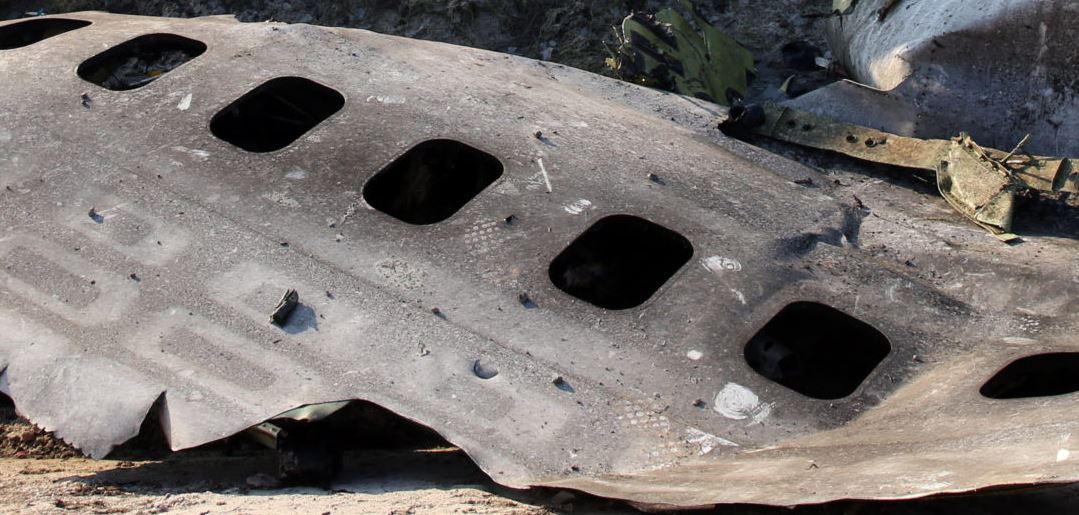
An uncontained engine failure would not spread shrapnels in such a wide area throughout the skin. Previous incidents like SWA 1380 and Delta 1288 showed limited distribtion of pieces of the engine.
However a Qantas Airbus A380 had severe damage after one of its engines exploded.
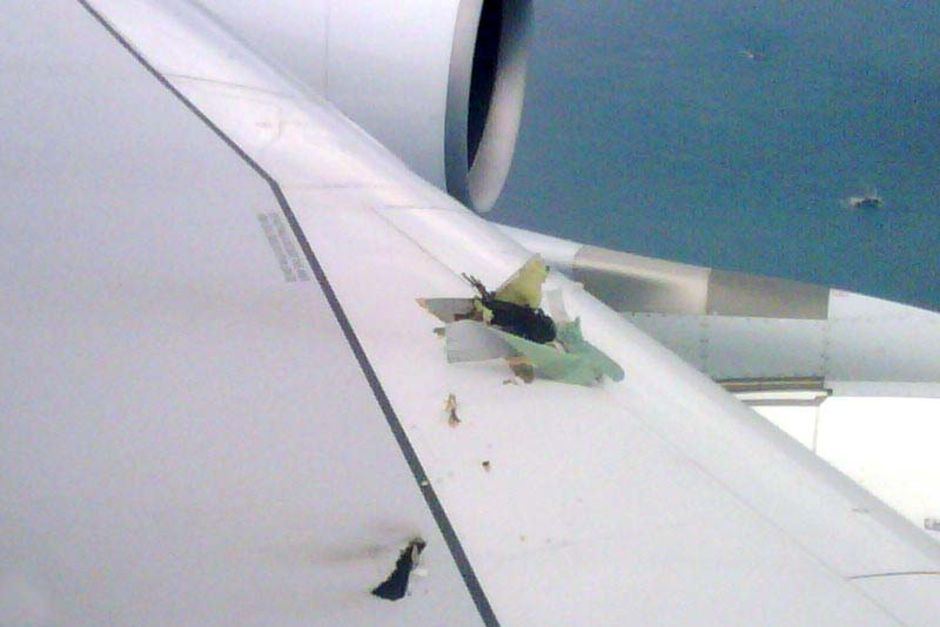
The tail has was seems a lot of of soot on it. Another indication for a huge fire which was likely near the wings while flames extended towards the tail.
The cause of these holes could be because of an exploding engine, a missile or result of impact with the ground.
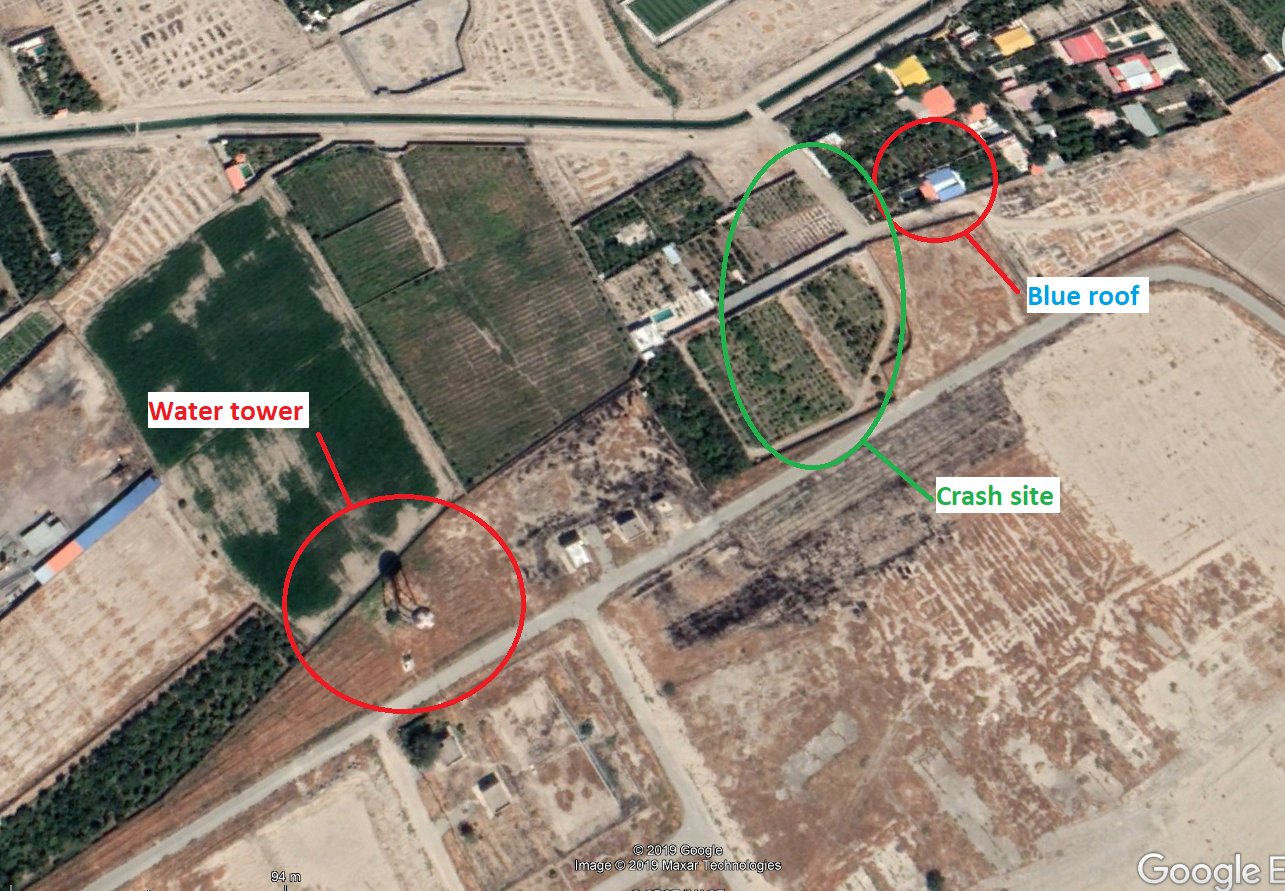
The debris on the crash site were located as indicated in this photo (source)
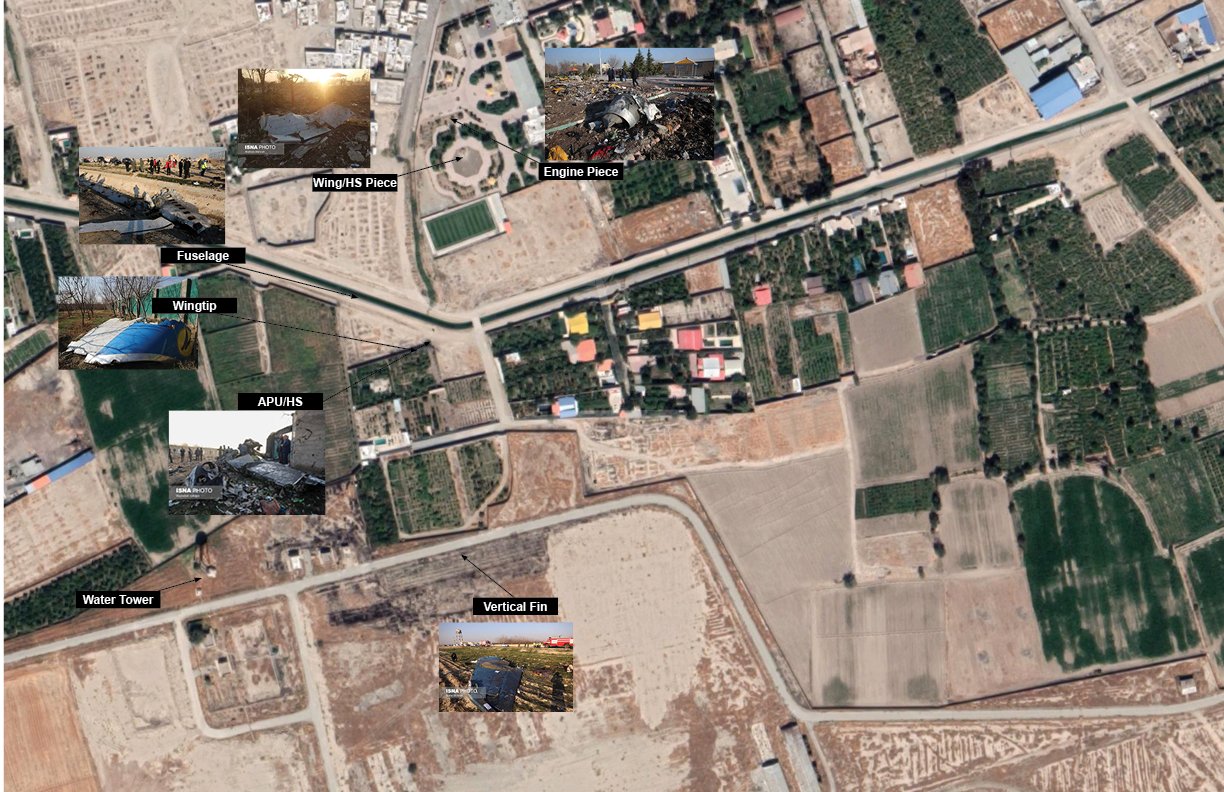
The ISNA news agency published a lot of photos of the crashsite here.
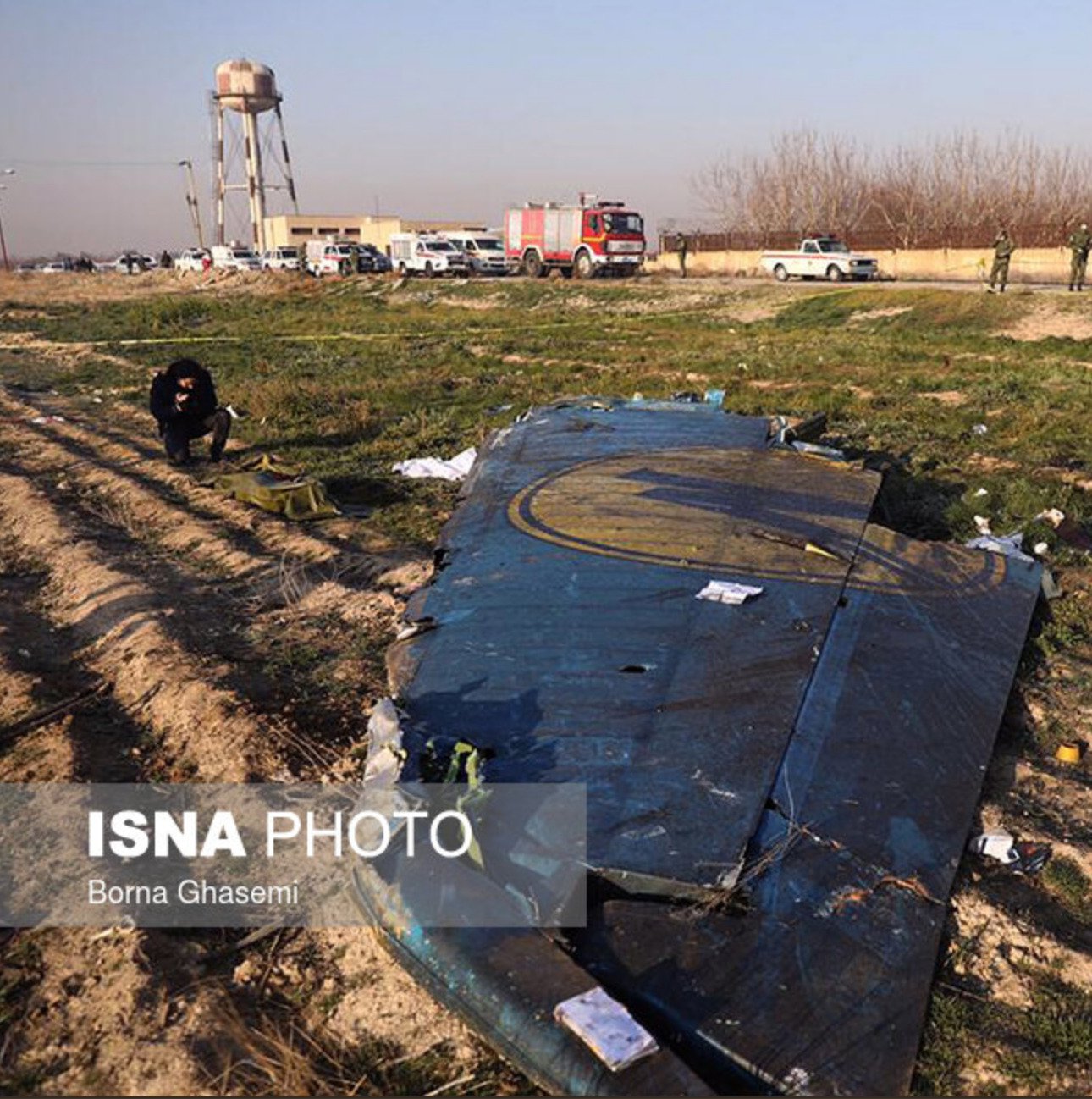
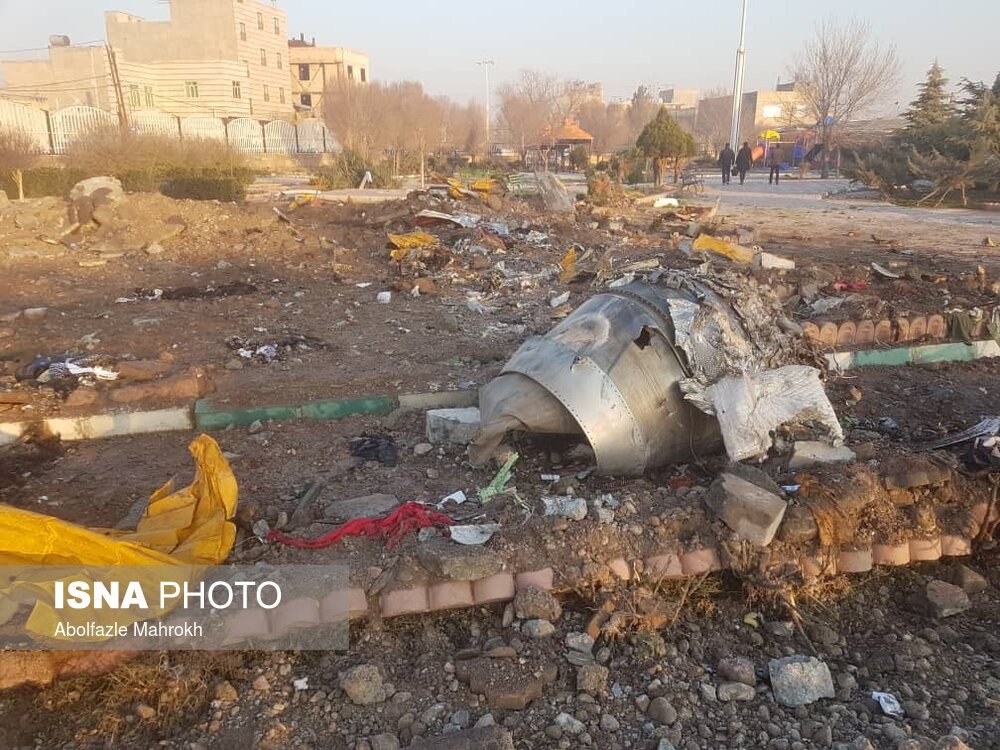
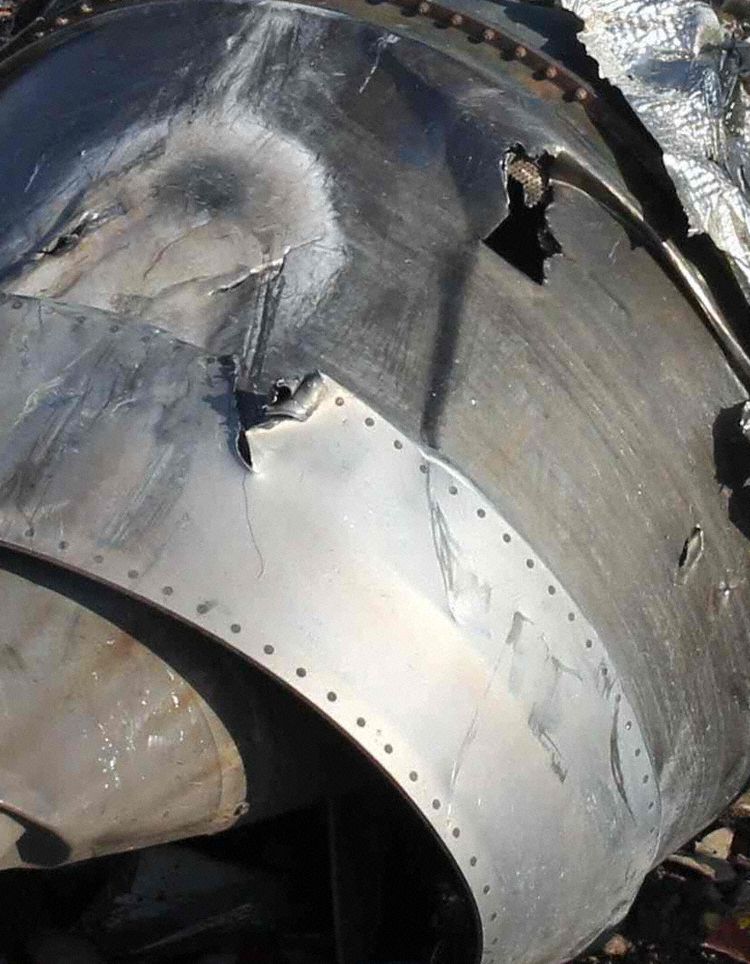
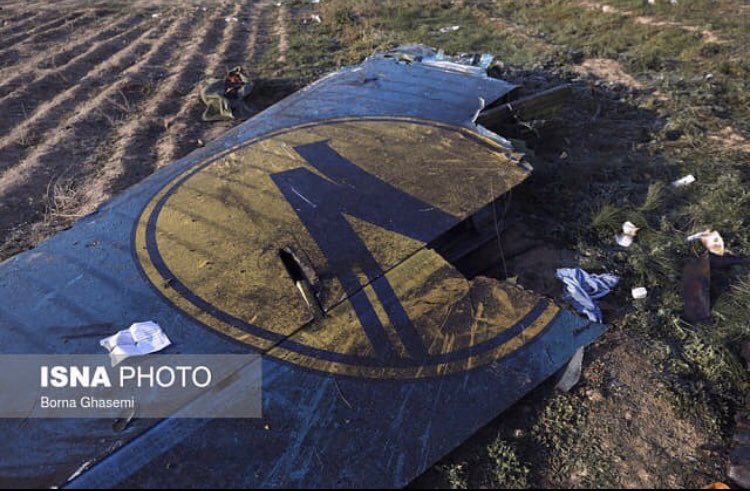
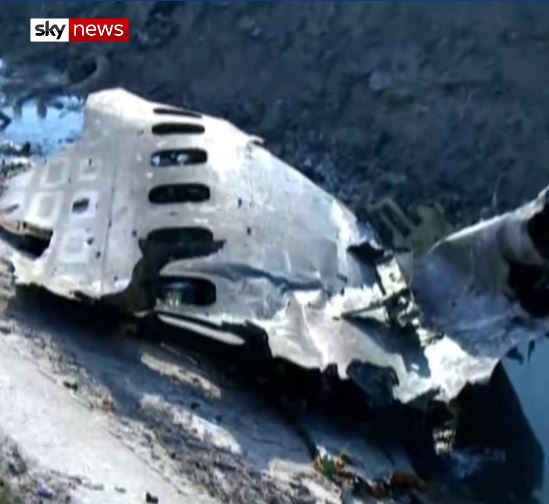
photos
https://en.mehrnews.com/photo/154308/Ukraine-Intl-Airlines-plane-crashes-in-Tehran-after-takeoff
#Breaking First footage of the Ukrainian airplane while on fire falling near #Tehran pic.twitter.com/kGxnBb7f1q
— Ali Hashem علي هاشم (@Alihashem) January 8, 2020
https://news.sky.com/story/airliner-with-180-people-on-board-crashes-after-taking-off-from-tehran-international-airport-11903445
Nice work, but please note that “Al Hadath” is not a “Jordanian news outlet” , it is part of “Al -Arabiya” tv network, which is mainly a Pan-Arab Saudi news network.
Unless you are referring to something different than https://www.alhadath.net/