Lawyer Mary Schiavo tells a lot of nonsense on Air India Boeing 787 crash
Mary Schiavo is former US Department of Transportation Inspector. She now works as a lawyer at MotleyRice . She appeared on CNN as an aviation analyst. And she spoke to a lot of Indian media about the crash of Air India flight 171.
There is a long list of factual incorrect statements she made about aviation accidents. Below are just a few examples.
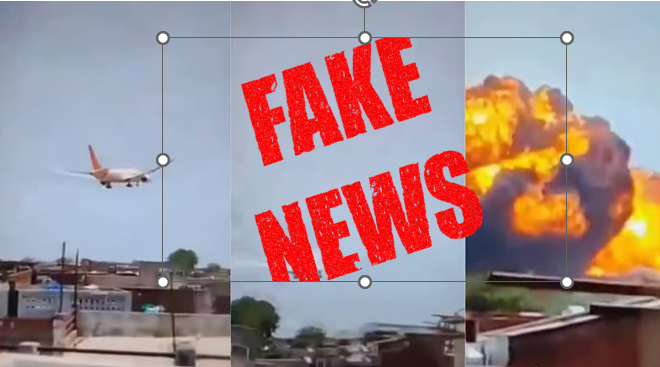
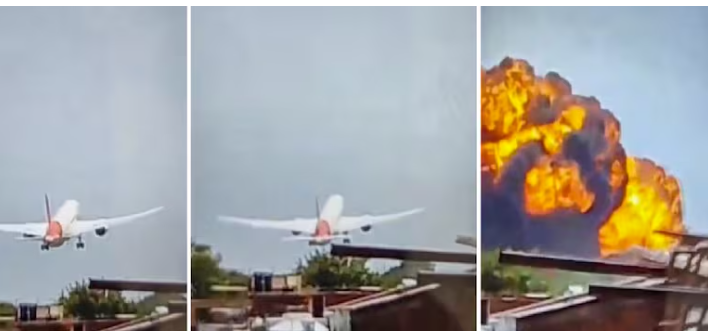
Air India 171 crash
Schiavo made several factual incorrect statements in the media about the crash. She stated that a similar situation occured with an All Nippon Airways B787 in 2019. Not true. She claims ” it is the plane, not the pilot”. Despite the facts listed in the preliminary report. Nothing in the report points to a technical error. Of course during the investigation something might found, but Schiavo does not know.

To Financial Express she stated:
Schiavo exclusively told FinancialExpress.com that this is not the first time fuel switch transitioned from “Run” to “Cutoff” on its own. It happened five years ago, too.
nonsense!
Al Jazeera wrote
she then is quoted in the same article:
Schiavo told FinancialExpress.com that while Boeing 787 can fly on one engine, in Air India’s case, both engines failed simultaneously.
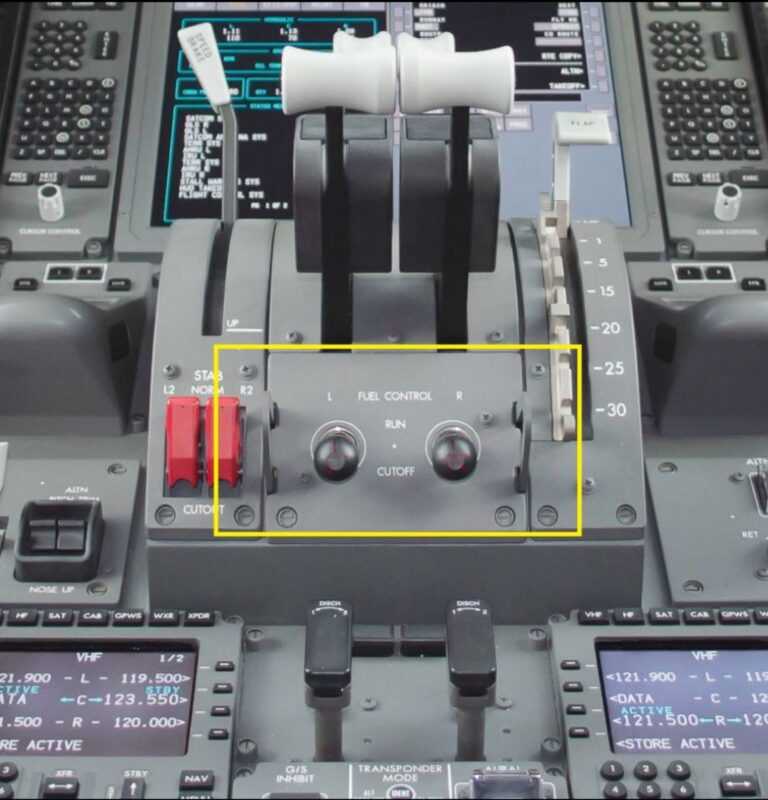
The engines of the Boeing 787 of AI171 did not ” fail”. The preliminary report states both fuel control switches were transitioned to CUTOFF. By design the engines stop as the flow of fuel to the engines is stopped.
Journalism in India is extremely bad because biased and not well informed. Proven by this line in the article: When we asked why the second engine couldn’t restart and why the RAT (RAM Air Turbine) didn’t function
The RAT functioned perfectly.
She highlighted a similar incident during which one of the engines suddenly shut down midflight on an All Nippon Airways Boeing 787 during its final approach to Osaka, Japan, in 2019.
This is incorrect. The ANA B787 had an uncommanded engine shutdown after landing of both engines. Not at final approach.
Al Jazeera wrote :
Investigators later found that the aircraft’s software had mistakenly interpreted the plane as being on the ground, triggering the thrust control malfunction accommodation system, which automatically moved the fuel switch from “run” to “cutoff” without any action from the pilots.
That is not correct. There was no issue with fuel switches which went from run to cutoff.
Business Today quotes Schiavo as:
“There have already been two interesting somewhat similar situations on the All Nippon Airways flight back in 2019,” she said. “As the plane was coming into land, the fuel control cut off occurred. The plane itself cut off the fuel to the engines. The plane came in like a very heavy glider, but because it was landing, not taking off, there was no crash.”
Total nonsense. The aircraft was on the runway when both engines were uncommanded shutdown.
Then Business Today wrote :
She also referred to a more recent case involving a United Airlines Dreamliner flight between Washington DC and Nigeria. “The plane itself put the plane into a nose dive. There was a thrust issue, there was an engine issue, and the plane experienced some deviations,” she said.
Incorrect statement by Schiavo. AVherald published details on this incident here. There was a failure in both the left and right inertial reference unit (IRU). An IRU it plays a central role in navigation, attitude reference, and flight control. This incident has nothing to do with Air India 171.
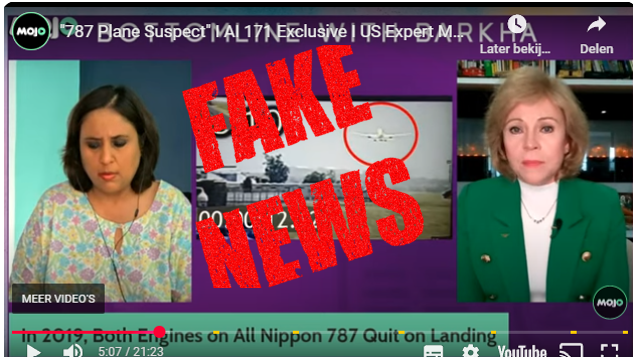
Mojo interview
Schiavo repeats a lot of the nonsense above in this interview.
On July 18 she repeats her mistakes. This is an interview for India media ‘ Times now’ .
Her book Flying Blind, Flying Safe
In 1997 a book written by Mary Schiavo was published. It became a bestseller. The book can be downloaded from her website.
Six students in his graduate course on airline economics spent months poring over the book line by line, checking facts and statements. Their conclusion: The book is so filled with mistakes, misstatements, unsupported anecdotes and confusing references that it would be dangerous to use it in formulating public policy. The Washington Past in 1998 wrote this article about the findings on the book.
The ATR
In her book Schiavo argues that ATR airplanes, especially the ATR‑72, were unsafe in icing conditions, suggesting their de-icing systems and certification were inadequate. She urged retrofits and accused the FAA of putting cost concerns ahead of essential safety upgrades like extending ATR’s de‑icing boots. A key passage (pp. 50–51) criticizes the FAA for valuing money over lifesaving measures, explicitly naming ATR among aircraft needing “actual tests of safety features…to extend the de‑icing boot on the wing of ATR planes”
This is what she wrote:
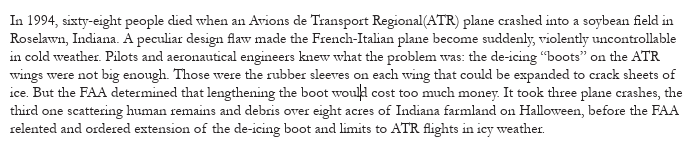
Claim: “A peculiar design flaw made the French-Italian plane become suddenly, violently uncontrollable in cold weather.”
It is misleading to state it was a design flaw.
The aircraft became uncontrollable due to ice accretion beyond certified areas, not necessarily a “peculiar design flaw.” The ice built up aft of the de-icing boots in an area not protected under then-current certification standards. The problem was a lack of understanding of supercooled large droplet (SLD) icing, not a structural or mechanical design flaw.
Claim “The FAA determined that lengthening the boot would cost too much money.”
❌ Unsubstantiated.
There is no official evidence that the FAA explicitly rejected boot extension purely on cost grounds before the crash. Regulatory inertia and lack of data on SLD icing contributed to inaction, but cost is not cited as the primary reason in the NTSB’s official report (AAR-96/01).
Claim: “It took three plane crashes… before the FAA relented…”
❌ Misleading.
There were not three ATR crashes due to icing before action. The Roselawn crash was the first and only fatal ATR crash in the U.S. related to icing. The FAA took significant regulatory action after this single event, including operational restrictions and changes to certification for SLD icing.
ATR and associated operators responded in Time magazine, accusing Schiavo of “sensationalist charges…blatantly disregard[ing] the facts,” affirming ATR’s record aside from the unusual 1994 accident .
Schiavo told a journalist of Al Jazeera utter nonsense.
Experts are cautious about this. US aviation analyst Mary Schiavo told the Financial Express in India that people should not draw premature conclusions, arguing that there is as yet no definitive evidence of pilot error.
She highlighted a similar incident during which one of the engines suddenly shut down midflight on an All Nippon Airways Boeing 787 during its final approach to Osaka, Japan, in 2019.
Investigators later found that the aircraft’s software had mistakenly interpreted the plane as being on the ground, triggering the thrust control malfunction accommodation system, which automatically moved the fuel switch from “run” to “cutoff” without any action from the pilots.
Schiavo warned that a similar malfunction cannot yet be ruled out in the Air India crash and stressed the importance of releasing the full cockpit voice recorder (CVR) transcript to avoid misleading interpretations.
“There is nothing here to suggest pilot suicide or murder,” she said. “The voices, words and sounds on CVRs must be carefully analysed.”
What happened with this aircraft is different than what Al Jazeera writes. While the text in the article does not indicate this is a quote by Schiavo, it is very likely she mentioned this incident to the journalist, based on this text : She highlighted a similar incident during which one of the engines suddenly shut down midflight on an All Nippon Airways Boeing 787 during its final approach to Osaka, Japan, in 2019.
TCMA does not have physical control of the switches.
These are just some examples of nonsense expressed by Schiavo. More will be added.